
Iran launched a barrage of ballistic missiles at Israel on June 7 after an Israeli airstrike in Beirut targeting Hezbollah, and Israel struck back hours later hitting multiple Iranian military targets. Meanwhile, President Donald Trump told the New York Post exactly five words that summarized the entire situation: "I call the shots."
That's it. That's the foreign policy. While CNN was running split-screen panic graphics and retired generals were stammering about World War III, the actual President of the United States picked up the phone and started brokering.
Here's what happened. Israel conducted an airstrike in Beirut targeting Hezbollah — the Iranian-backed terror group that has been lobbing rockets into northern Israel for decades. Tehran responded by firing a barrage of ballistic missiles directly at Israel. Israel, not being in the business of absorbing missile strikes quietly, retaliated within hours by hitting multiple Iranian military targets. The situation escalated fast, and for a few hours on June 7, the entire Middle East was holding its breath.
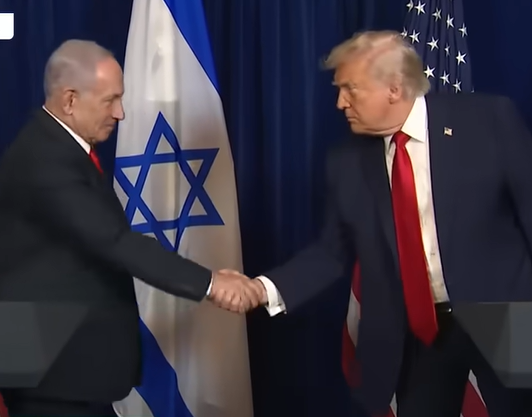
Enter Trump. The President made clear that Prime Minister Benjamin Netanyahu "won't have any choice" but to accept a peace deal. Not a suggestion. Not a diplomatic nudge. A directive from the guy who actually has leverage — because unlike every president since Carter, Trump is willing to use it.
Trump urged restraint from both sides, which is the kind of thing that sounds boring until you realize he's the only leader on the planet who can actually deliver it. He's not writing sternly worded letters to the UN. He's not dispatching a special envoy to hold meetings about scheduling future meetings. He's telling Netanyahu directly — we're ending this.
The contrast with the previous administration writes itself, but let's write it anyway. While Trump was actively managing an international crisis between two nuclear-capable nations, the Democrats were busy arguing about whether Trump's microphone stomp on NBC constituted an impeachable offense. Priorities.
The Israeli strikes targeted Iranian military installations specifically — not civilian infrastructure, not population centers. Precision. That matters, because it gives Trump room to negotiate from a position where Israel has demonstrated strength without crossing lines that make diplomacy impossible. This is the kind of chess game that requires an actual strategist in the White House, not a committee.
The media, naturally, is trying to frame this as Trump being reckless or authoritarian for saying he "calls the shots" on Middle East peace. These are the same people who spent four years praising Biden for "restoring alliances" while Iran rebuilt its nuclear program and Hezbollah stockpiled enough missiles to threaten an entire nation. But sure, Trump's the dangerous one because he used confident language in an interview.
Here's what the pearl-clutchers miss. When Trump says he calls the shots, he's not being arrogant — he's being accurate. The Abraham Accords happened because Trump was willing to throw out the State Department playbook and deal directly. That same energy is what's needed now, and both Jerusalem and Tehran know it.
Netanyahu is a survivor. He'll calculate the odds, look at what Trump is offering versus what defiance costs, and he'll make the smart play. Iran's regime is bleeding cash under sanctions and just watched its military assets get lit up in real time. Neither side wants this to escalate further — they just needed someone with enough authority and enough audacity to say "knock it off" and mean it.
Trump is that someone. He always was.