
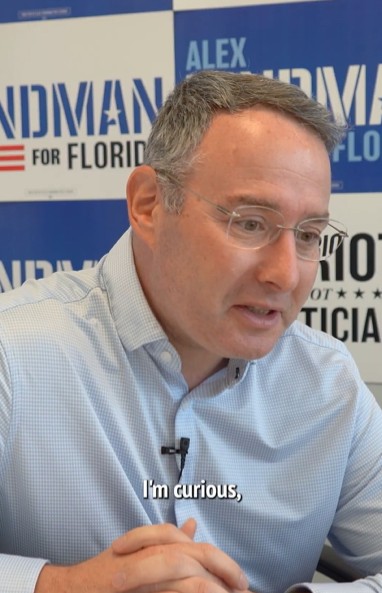
Alexander Vindman raised $16.3 million for Florida's Democratic Senate primary. His opponent, state Rep. Angie Nixon, raised $975,000. Nixon won 56% to 44%.
That's a seventeen-to-one spending advantage — and a double-digit loss.
Vindman, the former Army lieutenant colonel who became a household name after testifying during the first Trump impeachment in 2019, had positioned himself as the Democrats' best shot at flipping Ashley Moody's Republican Senate seat in Florida. Senate Minority Leader Chuck Schumer and DSCC Chair Kristen Gillibrand backed the play. Cable news rolled out the red carpet. Donors across the country opened their wallets. The full institutional weight of the Democratic Party lined up behind a man whose entire political identity was built on one thing: opposing Donald Trump.
Florida Democrats picked the self-described democratic socialist instead.
Nixon, a DSA-backed progressive who ran on Medicare for all, universal child care, and ending what she called "senseless wars," beat the party's hand-picked candidate without anything resembling comparable resources. In 2023, she introduced a resolution calling for a ceasefire between Israel and Palestine. When asked about cutting military aid to Israel, she didn't hedge. "I would have voted in support of that, because we cannot continue to send money to countries that are violating human rights," she said.
That's the candidate who just cleaned Vindman's clock by twelve points.
The results mark the second Vindman to hit a political wall in recent months. Alexander's twin brother Eugene Vindman, currently a U.S. Representative from Virginia, has had his own public meltdowns — including a widely covered incident where he stormed out of a meeting with constituents.
The pattern is worth noting. The Democratic establishment spent years elevating the Vindman name as a symbol of anti-Trump resistance. The theory was simple: impeachment testimony equals political capital. That theory has now been tested twice. It failed twice.
"We showed the world what organized people can accomplish," Nixon told supporters on election night. "And we showed the world what people are all about."
What organized people accomplished, in this case, was rejecting a candidate who had $16.3 million, wall-to-wall media coverage, and the full backing of party leadership — in favor of a state legislator who thinks the Democratic Party isn't far enough left.
The impeachment hearing was seven years ago. The fundraising emails kept coming. The cable hits kept booking. The checks kept clearing. And when actual voters in an actual primary had their say, they said no by double digits.
Sixteen million dollars. Seventeen-to-one spending ratio. Fifty-six to forty-four.
Sometimes the math is the whole story.