
Nidal Malik Hasan shouted "Allahu Akbar" and opened fire on unarmed American soldiers at Fort Hood in 2009. He killed 13 people. He wounded 32 others. He was convicted in 2013. And then, for thirteen years, nothing happened.
Now something has happened.
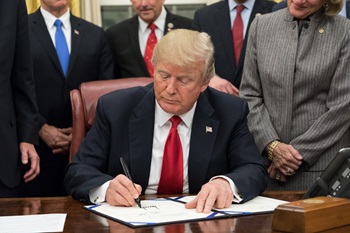
Chief Pentagon spokesman Sean Parnell announced Saturday that Secretary of War Pete Hegseth recommended — and President Trump approved — death by U.S. Army firing squad for Hasan, the former Army psychiatrist who carried out the deadliest terrorist attack on a U.S. military installation since September 11th.
"Judgment day for Hasan has finally come," Parnell said in the statement, reported by Just The News. The Secretary of the Army will set the time and place of the execution.
The full statement left nothing to interpretation: "Secretary of War Pete Hegseth has recommended — and President Donald J. Trump has approved — death by U.S. Army firing squad for convicted terrorist Nidal Malik Hasan, the jihadist who opened fire on unarmed American soldiers at Fort Hood in 2009. He killed 13 people and wounded 32 others while shouting 'Allahu Akbar' during the attack."
For years, the Obama administration classified the Fort Hood massacre as "workplace violence." Not an act of terror. Not jihad. Workplace violence — the same category as a fistfight in a break room. The families of the dead had to fight for years just to receive Purple Hearts and combat-related benefits, because the "workplace violence" label disqualified them.
The last U.S. military execution was in 1961, when Army Private John Bennett was hanged at Fort Leavenworth, Kansas. That's 65 years ago. He was convicted in 1955 of rape and the attempted murder of an 11-year-old girl in Austria.
Hasan has been sitting on death row since his 2013 conviction. He is paralyzed from the waist down after he was shot during the incident. Thirteen years of appeals, delays, procedural tangles, and free medical care — while the families of Staff Sergeant Amy Krueger, Private Francheska Velez, and eleven other murdered soldiers waited for a justice system that couldn't find the ON button.
The method itself sends a message. A firing squad. Not lethal injection, not some sanitized procedure designed to make the process comfortable for everyone except the victims' families. A firing squad — the military's own answer, delivered on the military's own terms, for a man who attacked the military's own.
The date and location haven't been announced. The Secretary of the Army will make that call. But the order is signed.
Thirteen soldiers went to work on November 5, 2009, at a processing center in Killeen, Texas, and never came home. Their killer spent more years on death row than some of them spent alive.
The paperwork is done. The waiting is over.