

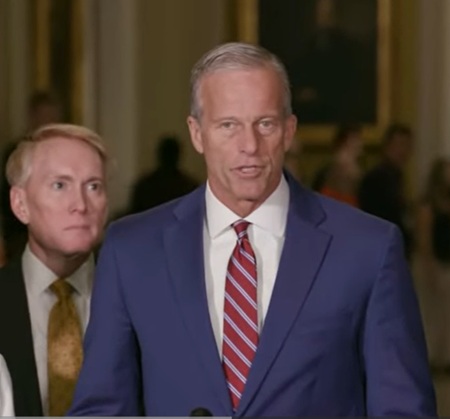
Senate Majority Leader John Thune just sent the Senate home for 37 days. But before he turned out the lights, he scheduled 11 pro forma sessions — the first one this Monday, August 10, specifically designed to prevent President Trump from making recess appointments.
One senator walks into an empty chamber, gavels in for thirty seconds, and gavels out. That's it. That's what stands between Trump and a functioning executive branch.
The maneuver exploits the Supreme Court's 2014 ruling in NLRB v. Noel Canning, which held that recess appointments require a Senate break of at least 10 days. By spacing these phantom sessions across the 37-day recess — from August 10 through September 10 — Thune ensures the Senate never technically hits that 10-day threshold. Regular business doesn't resume until September 14.
The pro forma sessions exist for one purpose: keeping the president from staffing his own administration. No legislation gets passed. No hearings happen. No senators are even required to show up. One person walks in, bangs a gavel, and walks out. The entire procedure takes less time than ordering coffee.
As the Gateway Pundit put it, "Trump is the only president in American history whose own party has repeatedly used this trick against him." Senators Mike Lee and Rick Scott have been among the few willing to call this what it is — obstruction from within. The rest of the conference stays quiet, content to let Thune play gatekeeper while pretending the arrangement is just standard procedure.
The procedural defense writes itself: pro forma sessions are longstanding Senate tradition, used by both parties. And that's true. Democrats used them against George W. Bush. Harry Reid used them against Trump in the first term. The difference is that those were opposition moves. Thune is supposed to be on the same team. When your own majority leader is running the same blocking play the Democrats invented, the word "majority" starts to lose its meaning.
This is Mitch McConnell's Senate without McConnell — same instincts, same institutional protectionism, different name on the door. The Senate doesn't block recess appointments because it's worried about bad nominees. It blocks them because confirmation hearings are leverage, and leverage is currency. Every appointment that requires Senate approval is a chit. Every delay is a negotiation. The 37-day recess isn't a vacation. It's a protection racket for the advice-and-consent monopoly.
That's not governance. That's a gavel used as a lock.