

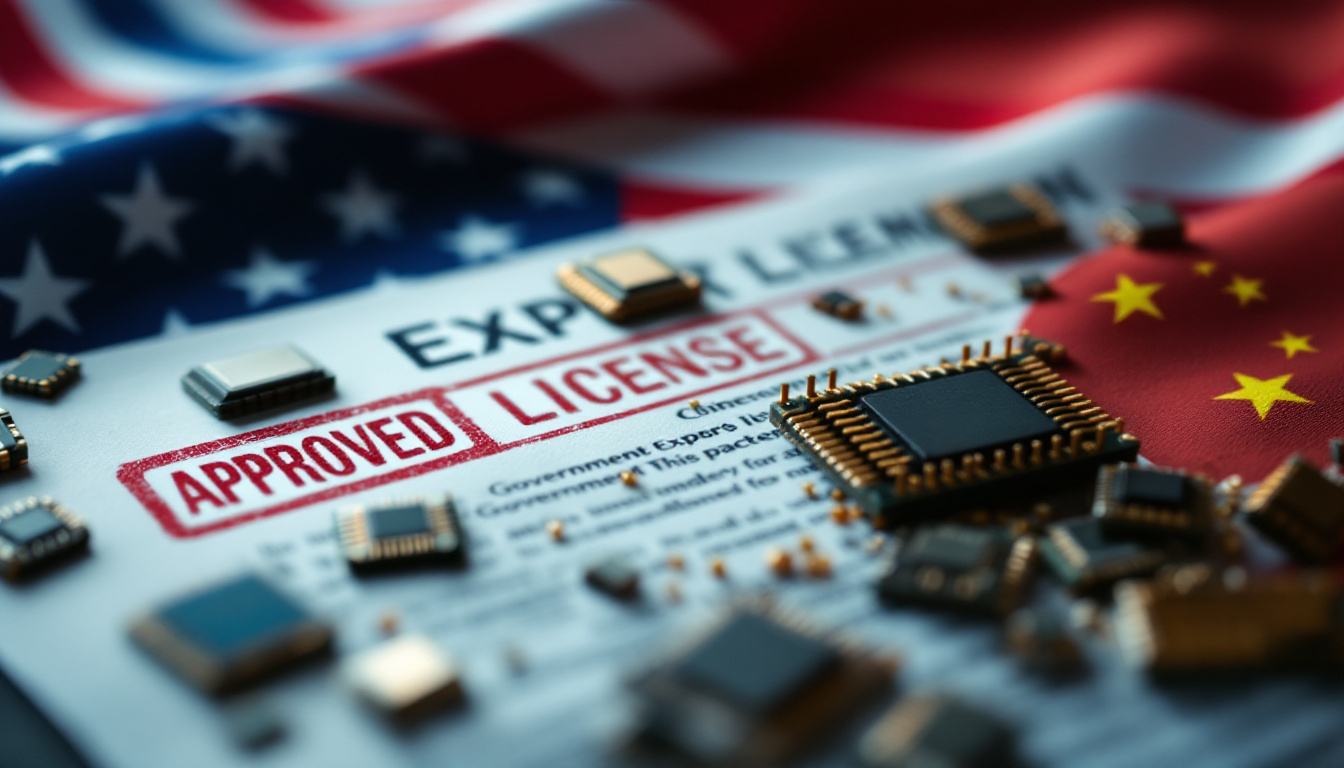
Tencent got 150,000 advanced AI chips. Alibaba got 75,000. Baidu got 43,000. BYD — the Chinese electric vehicle giant currently eating the global auto market — picked up 4,000. All approved by the U.S. Commerce Department. All stamped, signed, and shipped between December 2025 and May 2026.
Over 30 percent of those chips went to companies the Pentagon has formally designated as Chinese military companies.
The House Foreign Affairs Committee, chaired by Rep. Brian Mast, released the export license documents on Thursday, and the numbers are worse than anybody guessed. The Commerce Department's Bureau of Industry and Security approved 21 export licenses covering 879,868 Nvidia and AMD chips — including Nvidia's H200 and AMD's MI325X models — for Chinese buyers. Those aren't commodity parts. Those are the processors that train the AI systems everybody keeps warning us about.
The Chinese companies had actually requested 3.4 million chips during that six-month window. The Bureau of Industry and Security said no to most of them. But "most" still left nearly 880,000 advanced processors heading across the Pacific to firms that answer to Beijing.
Chris McGuire, a former U.S. official and U.S.-China technology expert, didn't mince — well, let's just say he was direct. "The fact that over 30 percent of the AI chips sent to China were shipped to companies that the Department of War has designated as Chinese military companies is astonishing," McGuire said.
Nvidia, for its part, issued a statement claiming that "despite receiving some licenses, we have since stopped shipping H200s to China." That's the defense. We got the licenses. We used some of them. We stopped eventually. The Washington Examiner first reported the scope of the approvals.
The timeline matters here. These licenses were approved under the existing export control framework — the same framework that was supposedly tightened specifically to prevent advanced AI technology from reaching the Chinese military. The Bureau of Industry and Security is the agency tasked with enforcing those controls. It approved the shipments anyway.
Every few months, a new report lands on a congressional desk explaining how China is racing to achieve AI dominance for military applications — autonomous weapons, surveillance systems, battlefield decision-making. Every few months, another hearing produces testimony about the strategic danger of letting Beijing close the gap. And in between those hearings, the same government that funds the reports was approving export licenses for the chips that make all of it possible.
The stock market noticed. Nvidia dropped 3.3 percent on the news. AMD fell 7.7 percent. The Nasdaq slid 2.2 percent and the S&P 500 dropped 1.8 percent. Investors apparently understood something the Bureau of Industry and Security didn't: when Congress starts releasing your license approvals to the press, the regulatory environment is about to change.
Three-point-four million chips requested. 879,868 approved. The Pentagon's own military-company list ignored by the Pentagon's own government. That's not a policy failure. That's a supply chain.