

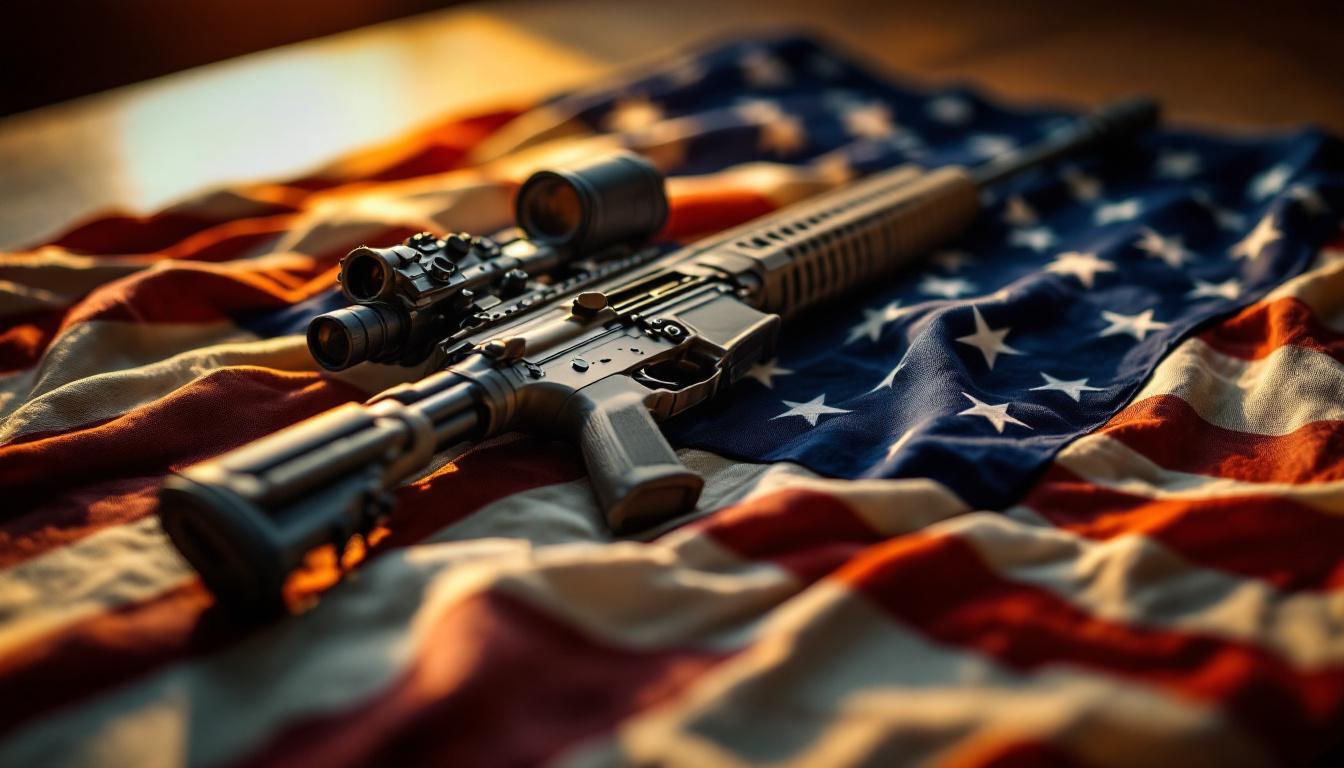
Here’s a sentence that would have been unthinkable five years ago: the Department of Justice is now in federal court arguing that state assault weapons bans are built on “little more than cosmetics, appearance, or the ability to attach accessories.”
Not the NRA. Not a gun-rights lawyer with a podcast. The Department of Justice — the same federal government that has watched states ban these rifles for thirty years — just filed a brief saying the bans are legally indefensible.
That changes things.
There are an estimated 30 million AR-15-style rifles in civilian hands in America right now. One in twenty American adults owns one. That’s more people than live in the entire state of Texas. You cannot look at 30 million of anything and call it “unusual.” You cannot call it a “weapon of war” when the war it’s being used in is against paper targets on a Saturday morning.
That number matters because it’s the foundation of the entire legal argument. Heller in 2008 established that firearms “in common use for lawful purposes” are constitutionally protected. The AR-15 is the most common rifle in America. The math isn’t complicated.
Bruen in 2022 sharpened the blade further. The Supreme Court ruled that any gun regulation has to be consistent with this country’s actual historical tradition of firearm regulation — not just a policy goal a politician finds appealing. Guess what doesn’t have a historical tradition. Banning the most popular rifle in the country because it has a pistol grip and looks aggressive on television.
Remember when Beto O’Rourke stood on a presidential debate stage in 2019 and said, “Hell yes, we’re going to take your AR-15”? The crowd cheered. The media called it a breakthrough moment. It was the clearest statement of where that side of the argument was always heading — not regulation, not safety, but confiscation. The courts have been sorting out the constitutional wreckage of that philosophy ever since.
Here’s where it stands today. In December 2024, a federal judge in Illinois issued a permanent statewide injunction striking down the Protect Illinois Communities Act — the state’s assault weapons ban. Struck it down entirely. The Seventh Circuit stepped in and stayed that ruling while the appeal proceeds, so the ban remains in effect for now. But that trial-level decision doesn’t vanish. It goes up.
Meanwhile, New Jersey’s AR-15 ban is being heard en banc by the Third Circuit — meaning the full court, not just a three-judge panel. Legal observers at Duke’s Center for Firearms Law have said this may be “the first final appellate decision that does strike down an assault weapons ban.” If that happens, the circuit split the Supreme Court has been waiting for finally exists.
Justice Kavanaugh has already signaled the Court is watching. When SCOTUS declined to hear the Maryland case last June, Kavanaugh noted the Court will address this “in the next Term or two.” Justice Thomas was blunter: “If the Seventh Circuit ultimately allows Illinois to ban America’s most common civilian rifle, we can — and should — review that decision.”
That’s not ambiguity. That’s a roadmap.
California has had its “assault weapons” ban on the books since 1989. New York’s SAFE Act was rammed through in the dead of night in 2013 — passed at 11 PM, because sponsors knew it wouldn’t survive a full public reading. Illinois, Maryland, Massachusetts, Connecticut, New Jersey — all of them targeted rifles that are functionally identical to dozens of other rifles that remained perfectly legal in those same states.
Because the bans were never about function. They were about appearance. They banned a look. They banned an aesthetic. They legislated based on what the rifle reminded a certain kind of politician of — and they called that gun safety.
The DOJ brief attacking D.C.’s ban spelled it out directly: the restrictions fail to account for whether prohibited weapons are “in common use today” or whether “law-abiding citizens may use these weapons for lawful purposes protected by the Second Amendment.”
That is the federal government calling three decades of state assault weapons laws constitutionally hollow.
If the Supreme Court rules the AR-15 is constitutionally protected — and every signal from the bench says that’s where this ends up — it doesn’t just block future bans. Every existing state ban becomes unconstitutional overnight. California’s ban. New York’s ban. Illinois, Maryland, Massachusetts, Connecticut, New Jersey — all of them.
The millions of Americans in those states who have been treated like criminals for owning the same rifle that’s perfectly legal two states over have been waiting for this for a long time.
They waited through every press conference, every “assault weapons” hearing, every campaign ad featuring a scary-looking black rifle. They fought in court, they showed up to vote, they made clear that the Second Amendment is not a suggestion that states can opt out of.
The Court is about to tell them they were right.