
Thailand's average agricultural tariff on American farm products was 28.3 percent. Poultry, ethanol, apples — all walled off behind duties designed to keep U.S. producers out of a $23.5 billion import market. That was the situation on Saturday morning.
By Sunday evening, Thai Prime Minister Anutin Charnvirakul had signed a joint statement pledging to eliminate all of it.
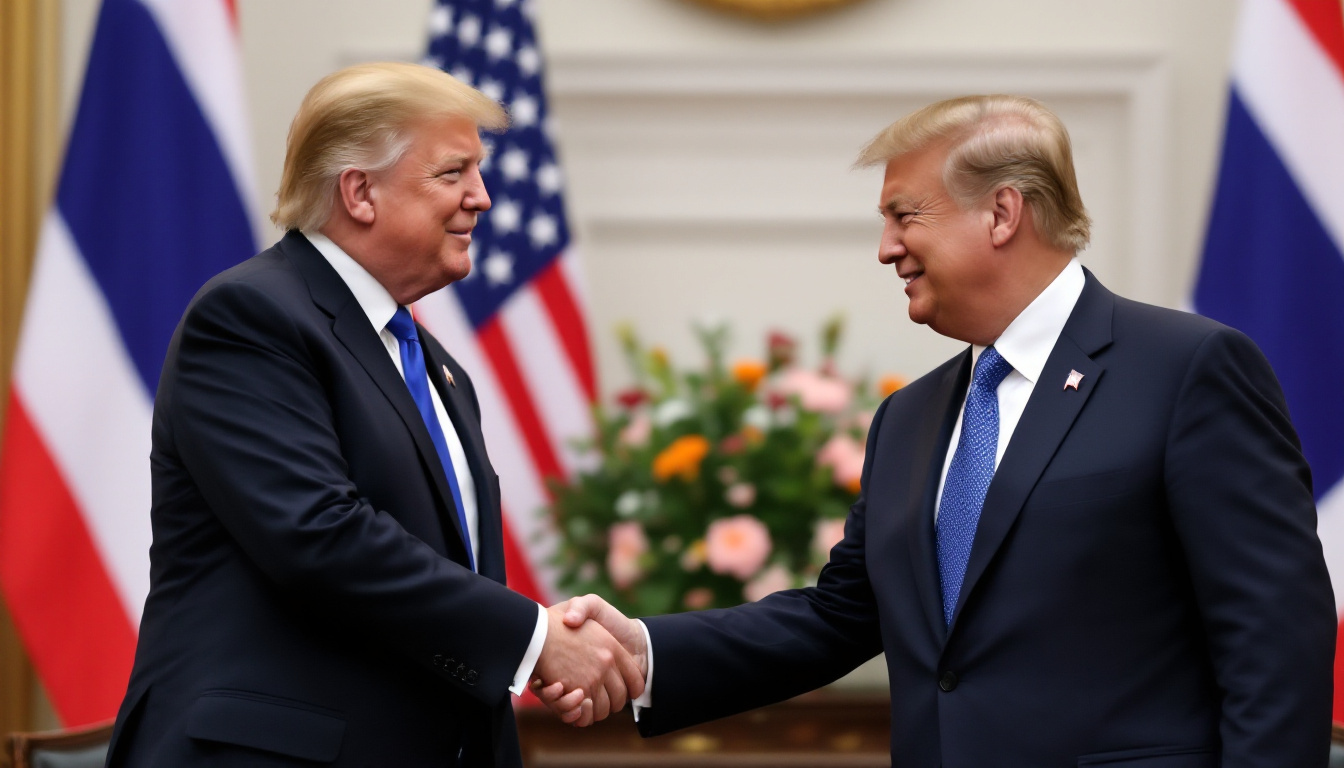
The deal, struck during President Trump's stop in Manila and reported by Just The News, commits Thailand to $2.6 billion in new purchases of American goods — vehicles, medical devices, pharmaceuticals, and the agricultural products that had been locked out for years. Agriculture Secretary Brooke Rollins put it plainly: "No one wins more than American agriculture."
She's not wrong. American farmers sold $1.66 billion worth of product to Thailand in 2025. That was with a 28.3 percent tariff wall in place. The wall is coming down, and the market Thailand imports from globally — $23.5 billion annually — just got a lot more accessible to producers in the Midwest and the South.
The apple market alone tells the story. Thailand had been closed to U.S. apples entirely. The deal reopens it — $5 million annually flowing to growers in Michigan, New York, Pennsylvania, and Virginia. Not transformational money by itself. But multiply that pattern across poultry, ethanol, and pharmaceuticals, and the picture changes fast.
Trump called it "an incredible victory for both countries." U.S. Trade Representative Jamieson Greer framed the mechanics: America can maintain tariffs to shrink the goods trade deficit while opening new markets abroad. That deficit with Thailand hit $71.9 billion in 2025 — a 58 percent increase that made the status quo indefensible.
The original leverage was a 36 percent reciprocal tariff Trump threatened in 2025. Thailand negotiated it down to 19 percent before formal talks began. The credentialed trade establishment treated both numbers as economic recklessness — the kind of blunt-instrument maneuvering that would isolate America from its Asian partners and crater agricultural exports.
Thailand has been a designated major non-NATO ally since 2003. The relationship isn't new. What's new is an American president willing to use the trade deficit as leverage instead of treating the alliance like a reason to accept lopsided terms. The last time a president attended an ASEAN summit was Trump himself in Manila in 2017. Nobody else bothered to show up.
The broader context is Thursday's planned trilateral meeting with Xi Jinping and Vladimir Putin in Shenzhen. The Thailand deal lands two days before Trump sits across from the two leaders most invested in reshaping global trade around their own terms. He walks in with a fresh bilateral win and a Southeast Asian ally that just agreed to buy American.
Farm country spent 2025 hearing that tariffs would destroy export markets. Thailand's agricultural tariff was 28.3 percent. America's farmers were selling $1.66 billion into it anyway. Now the tariff goes to zero and $2.6 billion in new purchases are on the books.
The exports went up.