
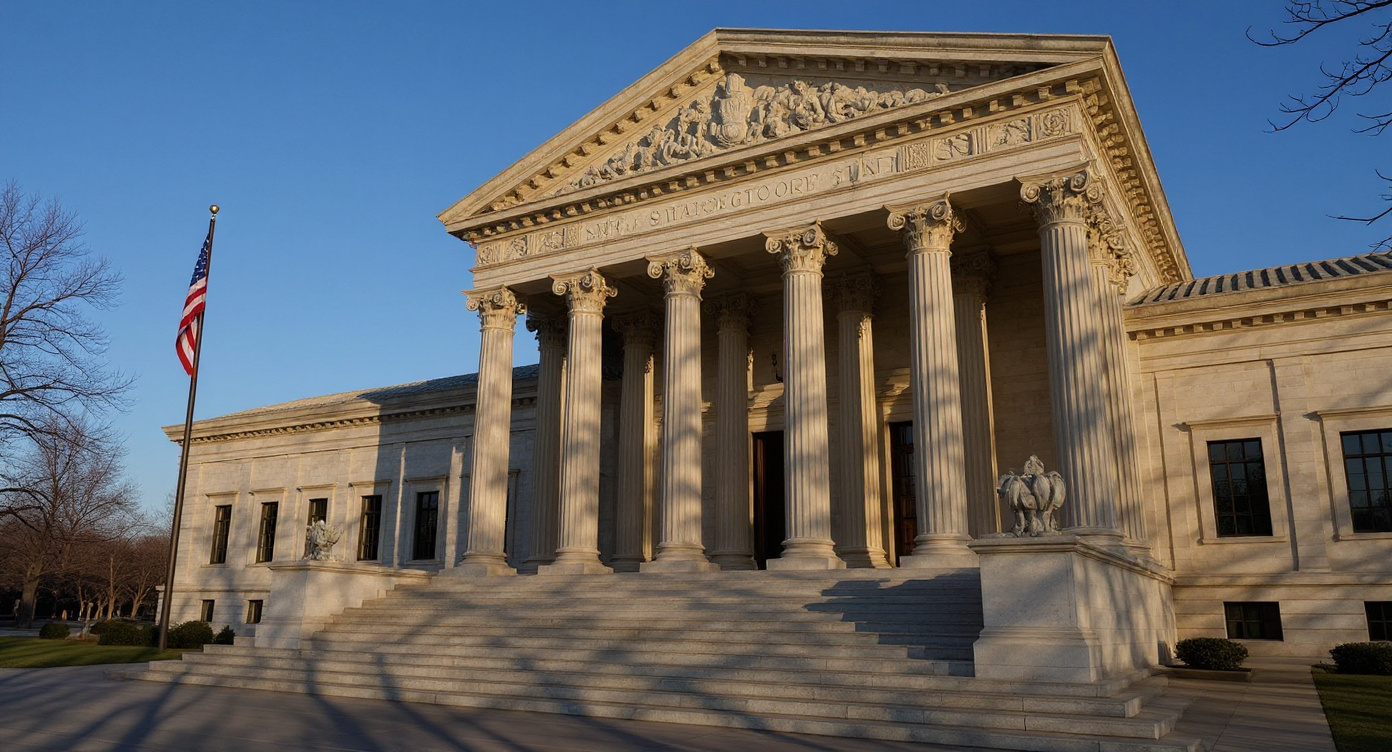
The question before the Supreme Court in DHS v. League of Women Voters, No. 26A308, was whether the federal government could verify that registered voters are United States citizens. On September 25, 2026, six justices said yes.
Three said no. Their names are worth remembering.
The 6-3 ruling permits the Trump administration's use of the Systematic Alien Verification for Entitlements program — known as SAVE — to cross-reference voter rolls with immigration records held by U.S. Citizenship and Immigration Services. USCIS Director Joseph Edlow has overseen the program's deployment, and the Court just cleared the runway.
The majority opinion cut through the procedural fog with a single sentence: "By prohibiting interference with the disclosure of information regarding citizenship status to DHS...Congress necessarily authorized DHS to request and receive that information." Congress already wrote the law. The Court simply told the executive branch to use it.
What the Court specifically overturned was a June 22, 2026, decision from the U.S. District Court for the District of Columbia, case No. 25-cv-3501, which had blocked the program. The Trump administration requested a stay. The Court granted it.
Justice Ketanji Brown Jackson authored the dissent, joined by Justices Sonia Sotomayor and Elena Kagan. Jackson wrote that "the harm caused by burdening or disenfranchising even a few lawful voters outweighs the nonexistent harm that the Government experiences."
Nonexistent harm. That's the word Justice Jackson chose to describe the presence of non-citizens on voter rolls. The SAVE database exists precisely because non-citizens do appear in government systems where they don't belong — benefit rolls, license databases, and yes, voter registrations. Calling the harm "nonexistent" requires ignoring the reason the verification system was built in the first place.
The League of Women Voters challenged the program on the theory that cross-referencing citizenship records would burden legitimate voters. The actual mechanism — checking names against an existing federal database — is the same process used for employment verification, benefit eligibility, and passport applications. Nobody calls E-Verify an attack on workers' rights. Nobody argues that checking citizenship before issuing a passport "burdens" applicants. The objection materialized only when the same process was applied to voting.
Midterms are weeks away. Every state now has access to a federal tool that can flag non-citizen registrations before ballots are cast — not after, when the damage is done and the recounts are meaningless. The timing matters because verification after an election is an audit. Verification before an election is a safeguard.
The dissent frames this as disenfranchisement. The majority frames it as what it is: confirming that the people choosing American representatives are Americans.
Six justices. Three dissenters. One database. Zero reason not to use it.