

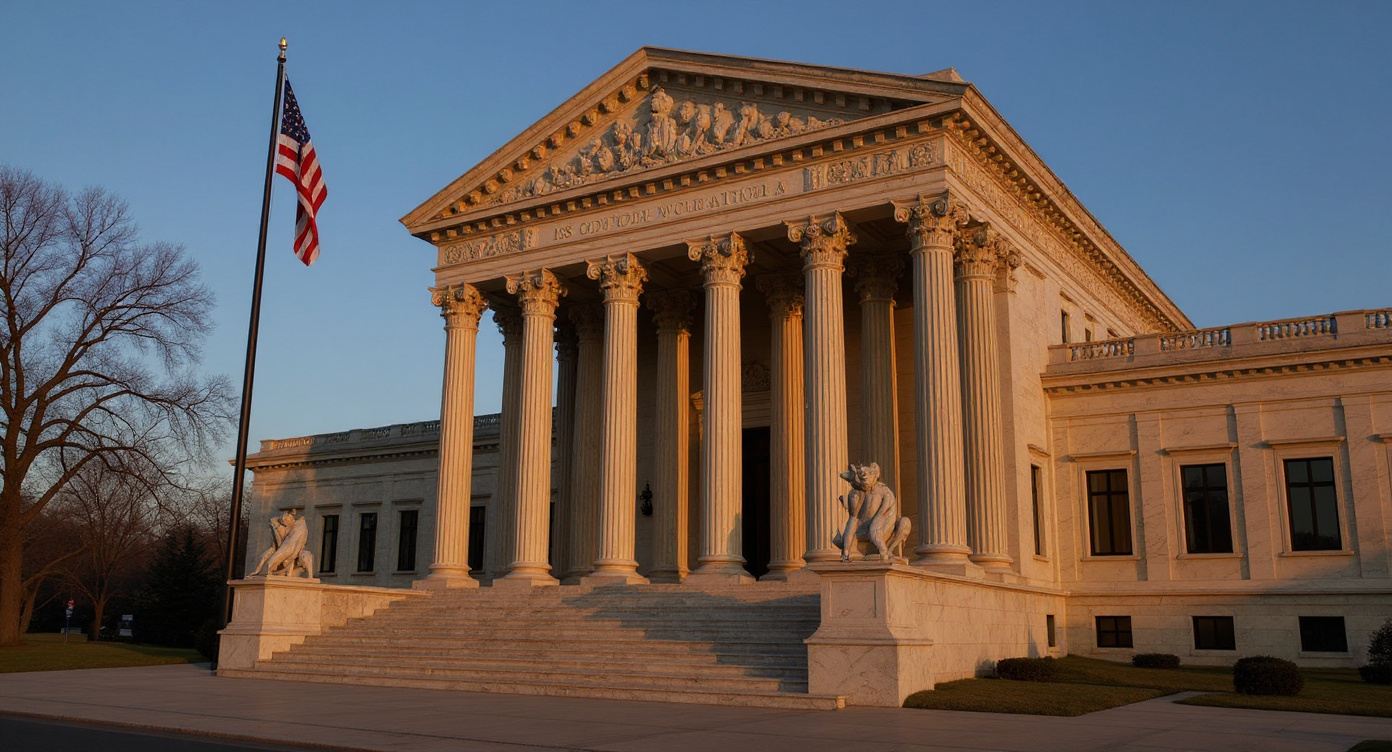
In a 6-3 ruling on Sunday, the Supreme Court declared that the President of the United States has the constitutional authority to fire the heads of independent federal agencies — for any reason, at any time. The case, Trump v. Slaughter, centered on President Trump's decision to remove two Democratic-appointed Federal Trade Commission commissioners, Rebecca Slaughter and Alvaro Bedoya, from their posts.
The FTC's old standard said commissioners could only be removed for "inefficiency, neglect of duty, or malfeasance in office." That standard just got incinerated.
Chief Justice John Roberts, writing for the majority, held that officers who exercise executive power must remain accountable to the President — and accountability requires the ability to remove them at will. The ruling overturns Humphrey's Executor v. United States, a 1935 precedent from the depths of the Depression that had shielded agency heads from presidential control for more than nine decades. That case created the legal fiction that certain agencies were somehow "independent" of the executive branch that houses them — a polite way of saying unelected bureaucrats could ignore the guy voters actually chose.
The implications are enormous. The FTC was just the test case. The Securities and Exchange Commission, the Commodity Futures Trading Commission, the National Labor Relations Board — every agency that hid behind Humphrey's Executor to insulate its leadership from presidential oversight just lost its legal armor. If you run a federal agency and you're slow-walking the president's agenda, you now serve at his pleasure. Full stop.
Justices Sotomayor, Kagan, and Jackson dissented, which tells you everything you need to know about which side of the ruling benefits the permanent bureaucratic class and which side benefits the voters who elected a president to actually run the executive branch.
A companion decision added a wrinkle worth noting. In a narrower 5-4 ruling, the Court permitted Federal Reserve Governor Lisa Cook to remain in her position while separate litigation over her removal continues. So the Federal Reserve gets a temporary reprieve — for now. The distinction matters: the Court drew a line between agencies exercising broad executive power and the Fed's unique monetary-policy role, but the direction of travel is unmistakable.
The "independent agency" framework was always a convenient arrangement for Washington. Congress creates agencies, staffs them with like-minded appointees, then locks the door so the next president can't change the locks. The result is a government that runs on autopilot regardless of who wins elections. Voters pick a direction; agencies pick a speed — usually somewhere between "glacial" and "reverse."
Humphrey's Executor was decided in 1935, when the federal government employed a fraction of the people it does today and exercised a fraction of the power. Ninety-one years later, agencies write rules that function as law, impose penalties that function as taxes, and make policy decisions that reshape entire industries — all while claiming they answer to no one the voters can reach. The Court just closed that loophole.
The ruling hands Trump immediate authority over agencies that have been, at best, indifferent to his policy priorities and, at worst, actively hostile. Slaughter and Bedoya are already gone. The question now is who's next — and whether the remaining agency heads across Washington start returning the president's phone calls.
For 91 years, the rule was that voters could pick the president but couldn't pick what the president's own agencies did. That was called "independence." Now it's called what it always was — unaccountable power.