
On August 24, the Supreme Court vacated a lower court injunction and allowed President Trump's March 31 executive order on election security to take full effect — weeks before states begin distributing ballots for the 2026 midterms. North Carolina starts sending military and overseas ballots on September 4.
Twenty-three Democratic states and Washington, D.C. filed suit to stop it. They lost.
The coalition brought two cases — California v. Trump and League of Women Voters of Massachusetts v. Trump — arguing the executive order amounted to voter suppression. District Court Judge Indira Talwani had issued an injunction blocking the order back in June, then doubled down with a second injunction in August. The Supreme Court found that Judge Talwani "lacked jurisdiction to enter the judgment" and cleared the order to proceed.
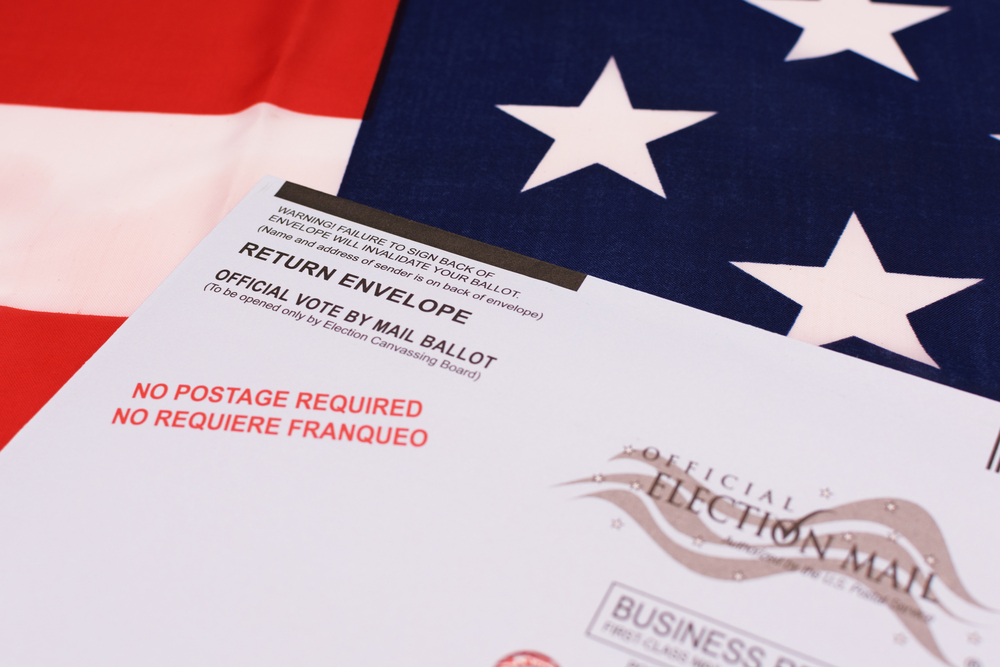
The executive order requires states to verify citizenship through the SAVE system — a federal database cross-referencing Social Security numbers with Department of Homeland Security records — before processing mail-in ballot requests. It also directs the U.S. Postal Service to implement chain-of-custody tracking for mail ballots and mandates that the Department of Justice investigate noncitizen voting referrals.
Here's where the "voter suppression" argument starts to fall apart. More than 250,000 illegal aliens were found registered to vote across four states alone — California, Nevada, New Jersey, and Pennsylvania. In New Jersey, software vendor IDEMIA flagged 6,600 noncitizens in the state's Motor Vehicle Commission registration system. Democratic Governor Mikie Sherrill then confirmed that "at least 400 of those individuals had, in fact, cast votes in recent elections."
That's a sitting Democratic governor admitting her own state's system let hundreds of noncitizens vote.
The numbers scale nationally. An estimated 24,000 noncitizens voted in the 2020 election, with 4,300 noncitizen votes cast in California and 2,500 in Texas. The Department of Justice has secured roughly two dozen noncitizen voting arrests and convictions, with approximately 90 additional cases under investigation. And in a detail that hasn't gotten nearly enough attention, the U.S. Census Bureau confirmed that China obtained 220 million American voter registration files — a number that covers roughly the entire active electorate.
Democrats are calling this ruling an assault on voting access. Which is an interesting way to describe a citizenship verification requirement. The SAVE system doesn't ask for party affiliation. It doesn't target any demographic. It checks one thing: whether the person requesting a mail-in ballot is a United States citizen. The objection to that check tells you more about the objectors than the policy.
For four years we heard that mail-in voting was "the most secure form of voting in American history." Impenetrable. Beyond reproach. Questioning it made you a conspiracy theorist. Now the Supreme Court says states have to verify that the people using it are actually citizens, and suddenly the same crowd is in full meltdown — not because the system is being dismantled, but because someone's finally checking the guest list.
3,800 noncitizen registrations traced to Mexico. 950 to Canada. A quarter-million illegal aliens on the rolls in just four states. A governor confirming hundreds of illegal votes in her own backyard.
Verifying citizenship before mailing someone a ballot used to be common sense. Apparently now it's a Supreme Court battle.