
Brazil holds its final round of voting on October 25, and Flavio Bolsonaro — son of former President Jair Bolsonaro — is heading into it after finishing first in the opening round on October 4, with his party sweeping congressional races underneath him. Luiz Inácio "Lula" da Silva, who held the polling lead for weeks, watched it evaporate in the final days.
Brazil isn't an outlier. It's the last domino.
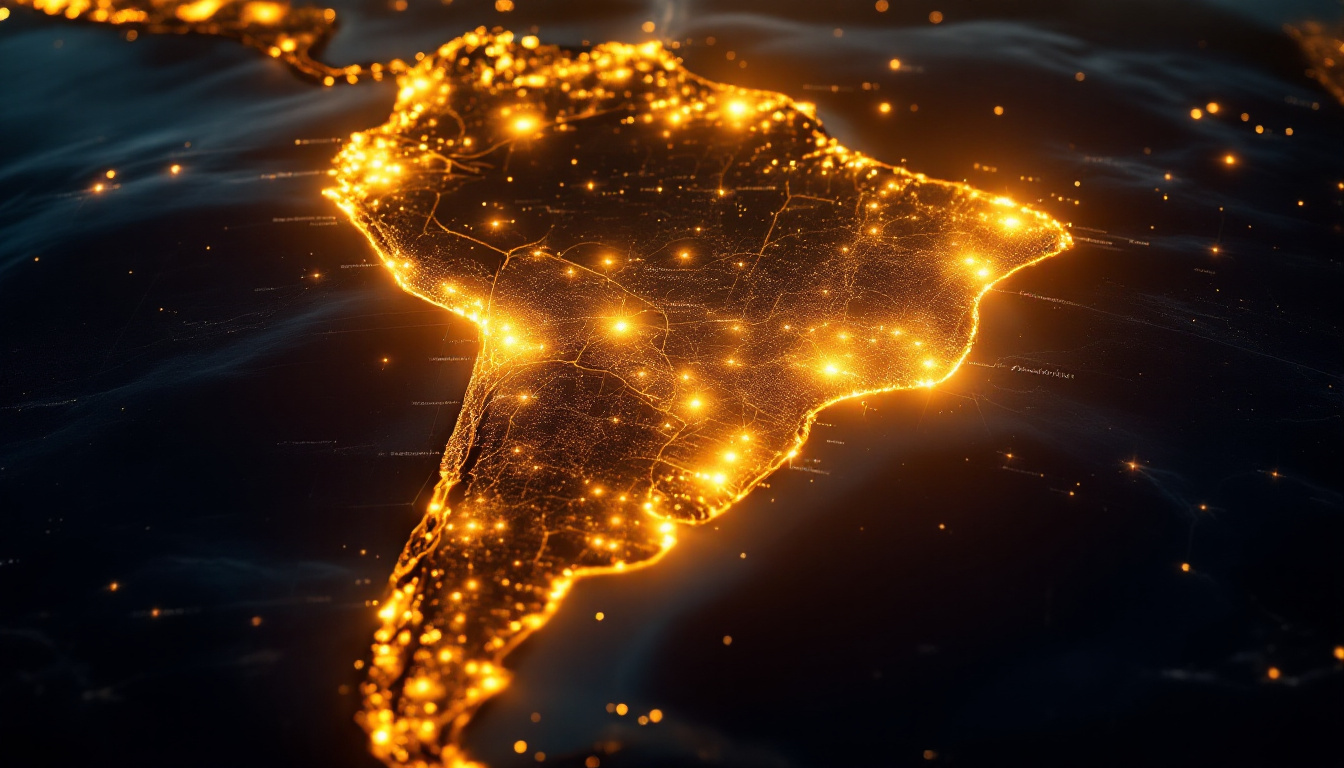
Since Javier Milei won the Argentine presidency in 2023 on a platform of slashing government and restoring free-market economics, an entire continent has quietly rearranged itself. Chile elected Jose Antonio Kast. Colombia elected Abelardo de la Espriella. Bolivia has Rodrigo Paz. Ecuador kept Daniel Noboa. Paraguay has Santiago Peña. Peru elected Keiko Fujimori. That's not a trend — that's a sweep.
Every major South American nation except Venezuela — where Maria Machado continues leading the opposition against an authoritarian regime — has moved toward conservative, free-market governance. The continent that spent decades as a laboratory for socialist experiments is running in the other direction.
Simon Bolivar, the man who liberated much of South America from Spanish colonial rule and died of tuberculosis at 47, once called American-style federalism "the ideal." He didn't live to see it take root in his own hemisphere. Two centuries later, his political descendants are finally trying it — not because Washington told them to, but because the socialist alternative burned through their economies and left nothing behind.
This didn't happen in a vacuum. Milei's Argentina became the proof of concept — a country that was hemorrhaging under state intervention, elected a president who took a chainsaw (literally, as a campaign prop) to the bureaucracy, and started showing results. Other nations watched. Other voters noticed. The pattern Casselman documents isn't ideological contagion. It's rational self-interest spreading across borders.
Casselman draws a parallel to what happened after 1991, when the collapse of the Marxist-Leninist regime in Russia sent shockwaves through Eastern Europe, Scandinavia, and even Western Europe and Italy. Nations that had flirted with central planning looked at the wreckage and chose differently. South America in 2026 is having its own version of that moment — slower, less dramatic, but arguably more durable because it's happening one election at a time.
The American media blackout on this story isn't accidental. A continent moving right doesn't fit the narrative that conservatism is a dying ideology clinging to power through structural advantages. It's harder to sell that line when Argentina, Brazil, Chile, Colombia, Bolivia, Ecuador, Paraguay, and Peru are all choosing free markets over state control — not because of gerrymandering or an Electoral College, but because voters showed up and picked it.
President Trump's approach to Latin America gets described in Washington as transactional. What Casselman's reporting actually shows is something the foreign policy establishment hasn't accounted for: the Western Hemisphere is aligning on its own. Not because of American pressure. Because the 21st century finally delivered what Bolivar wanted two hundred years ago.
October 25 is the date. Brazil votes. If Flavio Bolsonaro finishes what the first round started, every major economy on the continent will be governed by a conservative. Bolivar called it "the ideal." He just had the century wrong.