

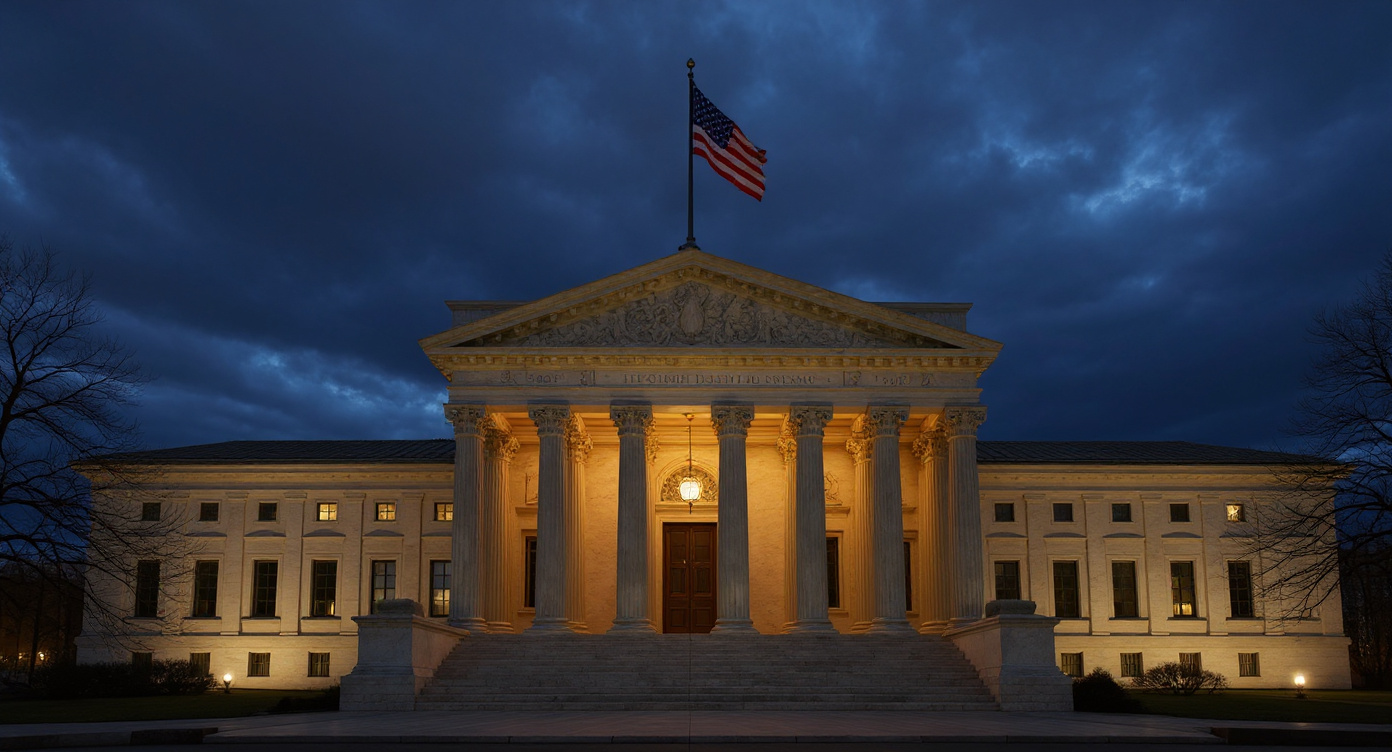
The Supreme Court needed exactly one page. No lengthy opinion. No drawn-out concurrences. A single page to tell the lower courts what the rest of us already knew: the President of the United States can deport illegal immigrants to countries willing to take them.
The deportation flights to South Sudan are back on the runway.
The one-page order, handed down Monday, lifts the appellate court block that had frozen the Trump administration's third-country deportation program. The policy is straightforward — when an illegal immigrant's home country won't accept them, the U.S. sends them to a third country that will. South Sudan emerged as one of the most prominent partner nations. A lower court had shut the whole thing down. The Department of Justice filed an emergency request for a stay with the Supreme Court, and the justices answered without even publishing a vote count.
Attorney General Todd Blanche called the policy "an entirely legal and invaluable tool to stem the tide of illegal immigration." Not a creative workaround. Not an executive overreach. A tool — one the administration built, the courts temporarily confiscated, and the Supreme Court just handed back.
The pattern by now is familiar enough to have its own filing cabinet. Administration announces enforcement action. Activist group finds a sympathetic district judge. Judge issues a nationwide injunction. Policy freezes while the government burns months fighting through the appellate process. The DOJ's emergency stay request to SCOTUS was the administration finally skipping to the last chapter.
The court that blocked deportation flights didn't produce a ruling that could survive contact with the Supreme Court for more than a few weeks. Oral arguments on the underlying case are scheduled for December, which means the justices will take a full look at the merits later this year. But the emergency order tells you which direction the wind is blowing — courts don't lift injunctions on policies they plan to strike down.
What makes this ruling land harder than a typical procedural win is the enforcement reality on the ground. Third-country deportation solves the specific problem that has let thousands of illegal immigrants avoid removal entirely: their home governments refuse to take them back. Without a third-country option, those individuals stay in the United States indefinitely, cycling through immigration court dates they may never attend. The program's opponents framed it as cruel. The Supreme Court framed it as legal.
One page. No vote count. Flights resume.