
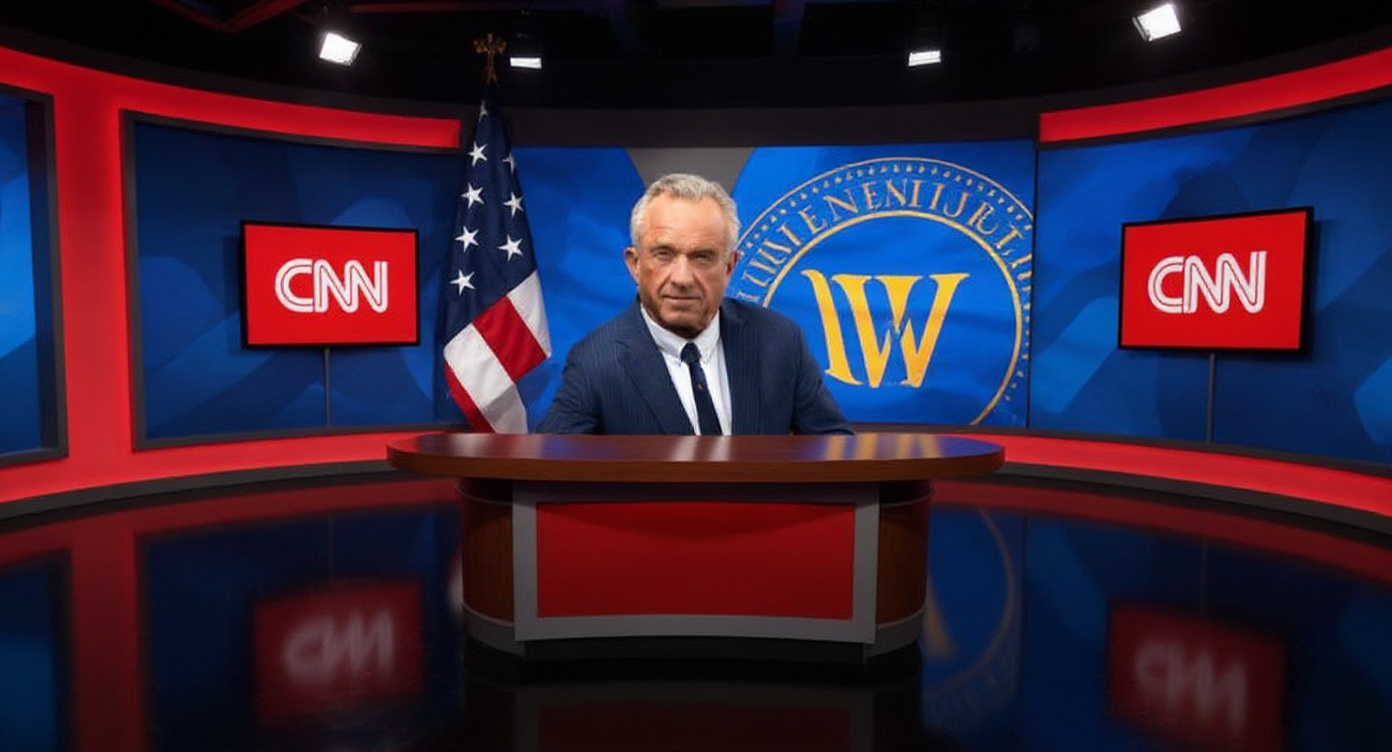
HHS Secretary Robert F. Kennedy Jr. sat across from CNN's Dana Bash on State of the Union and told her, flatly, that America has "the highest death rate from COVID of any nation on Earth." Bash tried to pivot to measles. Kennedy let her — and then buried her with that, too.
It was the kind of interview CNN books expecting a gotcha and gets a clinic instead.
Bash came armed with the standard playbook: measles outbreaks are at a 35-year high, the second record-breaking year in a row, and 93 percent of cases are among the unvaccinated. The framing was obvious — pin the outbreak on Kennedy's vaccine skepticism and make him squirm.
Kennedy didn't squirm. He agreed the measles vaccine works. "A measles vaccine is effective," he said. "It stops measles in about 97 percent of the cases." Then he reframed the entire conversation. If the vaccine is that effective and America still has outbreaks, maybe the question isn't about one HHS secretary's public statements. Maybe it's about why we have worse health outcomes than countries spending a fraction of what we do.
He pointed to the numbers. Mexico has 15 times the amount of measles per capita. Canada has four times. England has two times. Europe as a whole reported 137,000 cases. The measles problem isn't unique to the United States, and it didn't start in January 2025.
But the real damage came when Kennedy turned the conversation back to Fauci and the pandemic response. With the Senate Homeland Security and Government Affairs Committee's release of "The Fauci Diaries" still fresh — the documents showing Fauci privately estimated a COVID fatality rate far lower than what he told Congress — Kennedy had the receipts Bash wasn't prepared to address.
Bash attempted the familiar defense: Fauci was a dedicated public servant navigating unprecedented circumstances. Kennedy countered with 3.5 million businesses shut down, schools closed, and an American COVID death rate worse than any other country on the planet. Those aren't conspiracy theories. Those are outcomes.
When Bash tried to steer toward autism and vaccines — territory CNN clearly expected to be Kennedy's weak spot — he cited more than 40 studies involving 5.6 million people and referenced 73 studies linking Tylenol exposure to autism onset. He named the National Academy of Sciences and the Institute of Medicine. Whatever viewers expected from the segment, it wasn't the HHS Secretary rattling off study counts and sample sizes while the CNN anchor struggled to keep up.
The interview was a case study in what happens when the guest knows more about the host's own talking points than the host does.
The media spent years calling Kennedy a conspiracy theorist. Dr. Ashish Jha, Biden's head of COVID response, built a career defending the lockdown framework Kennedy was dismantling on live television. The American Academy of Pediatrics endorsed school closures Kennedy called catastrophic. Every institution that told Americans to trust the science is now watching the science get read back to them — on their own network, by a man they said should never be taken seriously.
Kennedy walked into CNN's studio with data, study citations, and a body count. Bash had talking points.
One of those approaches holds up under cross-examination. The other one needs a commercial break.