
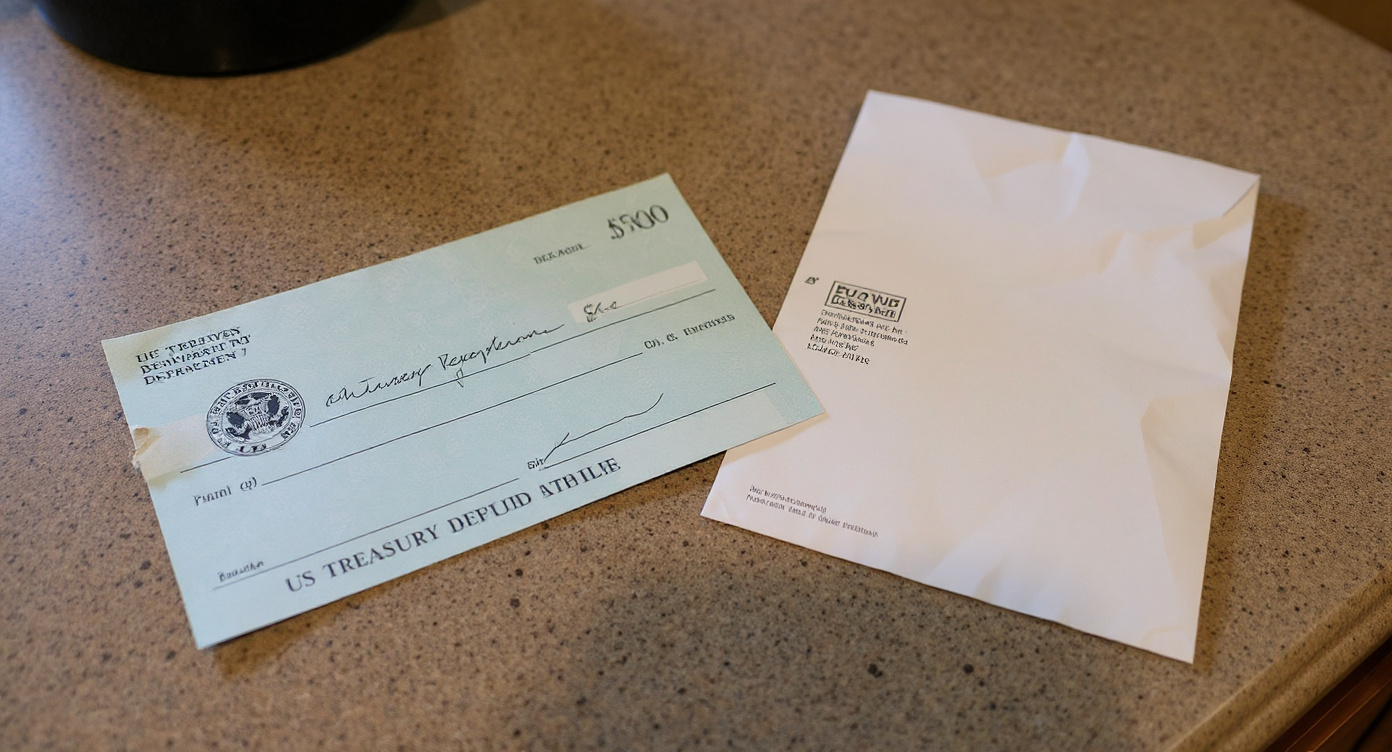
Somewhere in at least 30 states right now, nearly one million Americans are opening their mailboxes to find a $500 check from the U.S. Treasury Department. The memo line, translated from bureaucratese: the last administration charged you too much to use HealthCare.gov, and this is what was left over after they took their cut.
The Biden White House collected $500 million in excess user fees. Half a billion dollars skimmed off the top of a system people were legally required to use.
President Trump announced the refunds Wednesday, and the framing was not subtle. "For years, the Biden administration overcharged you to fund the operation of HealthCare.gov," Trump said. "That money belongs to hard-working Americans, not the Government, and now I'm returning it to you!"
The checks are arriving five weeks before the November midterms, which Democrats will point out as though the timing invalidates the math. It doesn't. The overcharges happened. The money was collected. The refund is a correction, not a campaign stunt — unless you believe the Biden team's decision to collect excess fees in the first place was also politically motivated, in which case the story gets worse for them, not better.
Trump added a line that landed quieter but hit harder: "You have paid into this flawed System, and now you are finally getting something back."
The refunds are part of a broader accounting of how the Affordable Care Act was actually administered versus how it was sold. Last week, Vice President JD Vance laid out the fraud numbers, and they are not small. The administration has recovered $2.2 billion in Obamacare fraud. They ended coverage for 750,000 people who were fraudulently enrolled and flagged another 419,000 for additional verification.
Vance put the scale in terms that don't require a policy degree to understand. "To put into context the amount of money that we're stopping from going to fraudsters today — $2.2 billion — the average American child receives about $4,000 in healthcare benefits every single year," he said. That $2.2 billion is roughly the annual healthcare cost for 550,000 American children.
The mechanics of the fraud were straightforward. "You have a system where, on the one hand, brokers are paid money to feed patients into the system, while on the other hand, the government isn't even checking whether the people enrolled are actually eligible for the program," Vance explained. "What do you have? Of course — rampant, rampant fraud."
Brokers got paid to sign people up. Nobody checked whether those people qualified. The enrollment numbers went up, the press releases went out, and the money disappeared into a system that was measuring its own success by how many people it could push through the door — not by whether any of them belonged there.
The $500 checks won't make anyone rich. They're not designed to. What they do is something more useful than a windfall: they put a dollar figure on the difference between what the government charged and what the government needed. That gap — $500 million — existed because nobody in the previous administration had any incentive to close it. More fees meant more budget. More budget meant more hires. More hires meant more people whose jobs depended on the system staying exactly as bloated as it was.
Trump has also floated a separate initiative — a $5,000 "Trump dividend" check — which is a different program with a different funding mechanism. The $500 Obamacare refund is narrower and harder to argue with. This isn't a stimulus. It's a return of property.
The previous administration ran HealthCare.gov like a tollbooth with no posted rates. They set the fees, collected the fees, spent the fees, and never told the drivers they'd been overcharged. The current administration found the overage, calculated the per-person amount, and mailed the checks.
The refunds are going out to recipients across more than 30 states. The Treasury Department is handling distribution.