
Fifteen hundred dollars. That's what fraudsters in Minnesota paid mothers to claim their children had autism — so the grifters could bill taxpayer-funded disability programs for services the kids never needed and never received.
The autism program's budget went from roughly $3 million in 2018 to approximately $400 million in recent years. Nobody in state government thought that was worth a phone call.
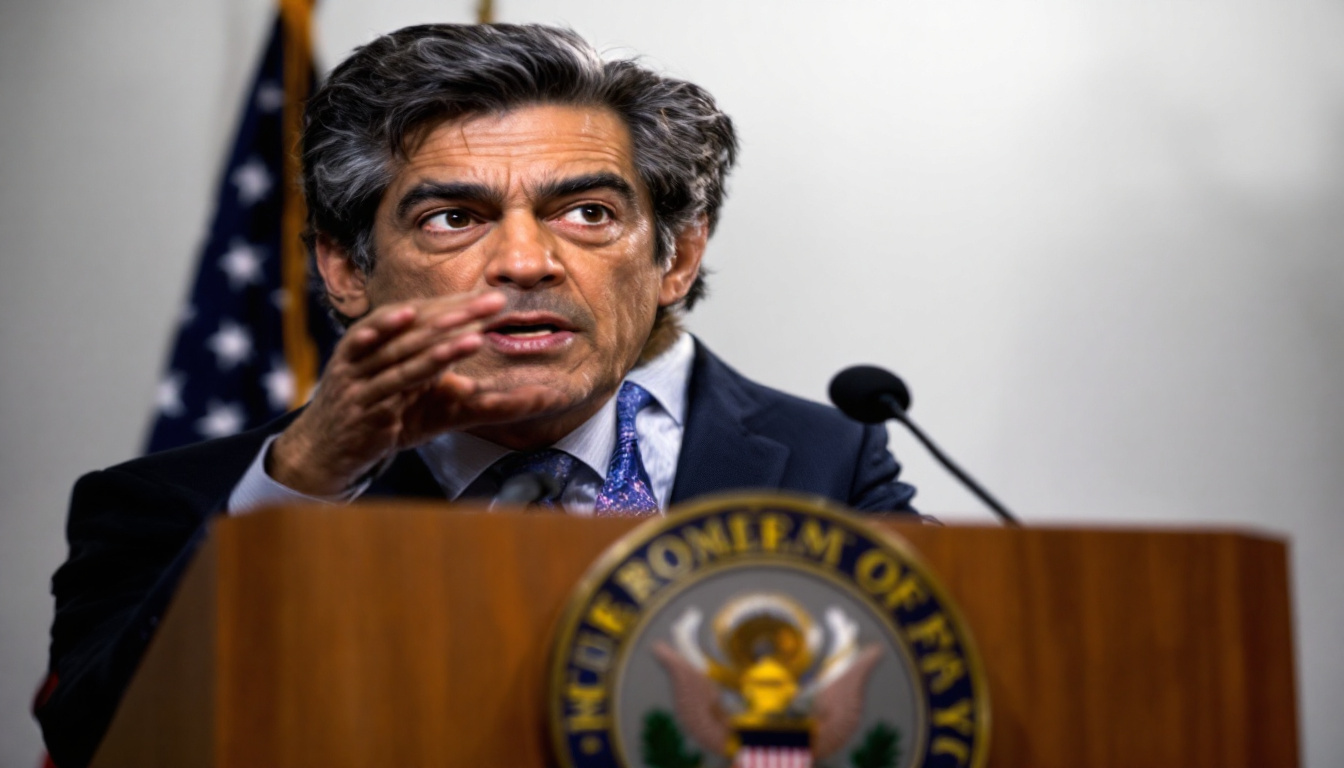
Centers for Medicare and Medicaid Services Administrator Dr. Mehmet Oz laid out the scheme during a White House meeting of Vice President JD Vance's Task Force to Eliminate Fraud. Dr. Oz described a network of fraudulent providers in Minneapolis who recruited mothers, coached them through fake diagnoses, and then billed Medicaid for treatments that existed only on paper. When CMS audited the flagged providers, one-third of them couldn't even be validated as legitimate operations.
"Fraud doesn't just steal our money," Oz said. "Fraud steals people's lives and it also steals our trust as a nation, and that is devastating to any country."
The numbers get worse. CMS identified 14 high-risk programs across Minnesota that have burned through $18 billion since 2018 — and the agency believes over half of that total may be fraudulent. Independent journalist Nick Shirley, who first drew national attention to the scheme by filming vacant facilities supposedly providing autism services, reportedly uncovered roughly $100 million in fraud in a single day of digging.
Oz put it plainly: "One in three shouldn't have been doing that job."
The CMS administrator gave Governor Tim Walz a 60-day ultimatum back in December to address the fraud or face consequences, including $500 million in deferred federal payments to the state. Walz's response was to call the whole thing "a campaign of retribution," accusing the administration of "weaponizing the entirety of the federal government to punish blue states like Minnesota."
Retribution. Not accountability. Not "we're investigating." Not "we'll cooperate." The governor of a state where con artists were literally bribing women to pretend their children are disabled looked at the federal investigators and said they were the problem.
This is the machinery behind every "compassionate" social program that never gets audited. A budget balloons from $3 million to $400 million, and the people running the state treat the growth as a success metric rather than a red flag. The providers are ghosts. The diagnoses are purchased. The children whose names appear on the forms are props in a billing scheme.
And somewhere in Minnesota, a mother who actually has an autistic child is navigating the same system these grifters looted — waiting longer, fighting harder, explaining more — because the program's credibility is now rubble.
The budget went from $3 million to $400 million in under a decade. Over half of $18 billion is suspected fraud. One in three providers were phantoms.
Tim Walz called the investigation "retribution."