
On June 10, Minnesota's Board of Pardons quietly signed off on a pardon for Tou Lue Vang, a 42-year-old Laos national convicted of sexually assaulting a 10-year-old child. The three officials who approved it — Governor Tim Walz, Attorney General Keith Ellison, and Chief Justice Natalie Hudson — did so without a single ABC, CBS, NBC, CNN, or MSNBC camera in sight.
Three weeks later, not one of those networks has mentioned it.
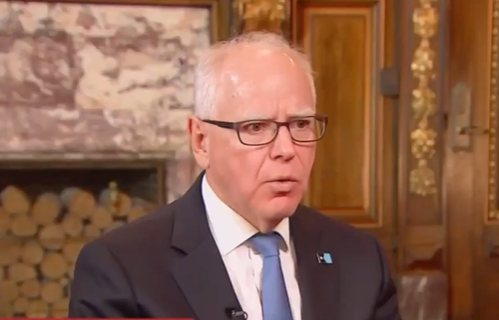
The Minnesota Board of Pardons requires a unanimous vote from those three officials. That means Tim Walz — the same Tim Walz who was the 2024 Democratic vice presidential nominee — personally voted to pardon a violent sexual predator. Keith Ellison, who spent years as the progressive darling of the DFL, voted right alongside him. So did Chief Justice Natalie Hudson.
The Minnesota Clemency Review Commission recommended the pardon. Its executive director, Carli Stark, sent Vang a letter that read: "Being granted a pardon is a notable achievement and a reflection of the work you have done since your conviction." A notable achievement. For the man who assaulted a child.
As Newsbusters reporter Jorge Bonilla pointed out, the media's selective outrage engine runs on a very specific fuel. "Any pardon issued by President Donald Trump will immediately raise the media's hackles and draw significant coverage," Bonilla wrote. "Controversial pardons by Democrats? Not so much."
He's not wrong. We've watched entire news cycles consumed by presidential clemency decisions. Panels of experts. Constitutional scholars dragged onto split screens. Grave warnings about the erosion of norms. That's the playbook when it's politically useful. When a Democratic governor pardons a man who sexually assaulted a 10-year-old, the playbook goes back in the drawer.
The silence isn't an oversight. Networks make dozens of editorial choices every day about what deserves airtime. A violent sex crime against a child, a pardon signed by a recent vice presidential candidate, a unanimous vote by three of the state's top officials — that clears every bar for newsworthiness. The decision not to cover it is exactly that: a decision.
Imagine Ron DeSantis had pardoned a convicted child predator. Imagine Glenn Youngkin. Imagine Greg Abbott. You wouldn't have to imagine — you'd already know their names because they'd have been on every chyron from breakfast to prime time for a week.
Vang's defense reportedly invoked cultural differences tied to his upbringing in Thailand and Laos. Whatever the clemency board made of that argument, the result is the same: a man convicted of one of the worst crimes on the books walks away with a state-issued clean slate, and the officials who gave it to him face zero public scrutiny from the outlets that reach the most Americans.
The pardon is the story. The silence is the tell.