
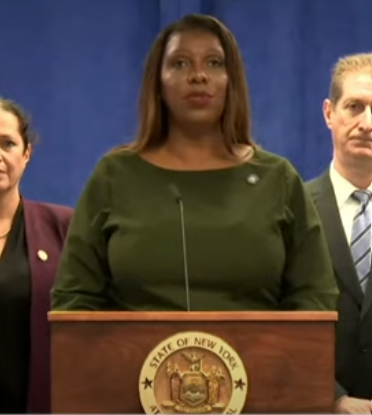
Daniel Wiesenfeld spent years as an Assistant Attorney General inside Letitia James's office. Then he sent an email to roughly 2,000 of his colleagues — the entire staff — alleging the boss was abusing her prosecutorial power.
The woman who built her 2018 campaign around going after Donald Trump is now the subject of the same kind of accusation she made a career on.
Wiesenfeld's allegations paint a picture of an office where political targets came first and legal justification came second. He claims his supervisor, Investor Protection Bureau Chief Shamiso Maswoswe, instructed him to investigate targets without establishing "a credible reason for targeting" them. In a functioning attorney general's office, the evidence leads to the target. In James's office, apparently, the target comes first and the evidence is an afterthought.
The broader allegation is that office resources were being used to pursue "convenient public enemies" rather than actual crimes. That phrase — convenient public enemies — lands differently when you remember James's track record. Her civil fraud case against Trump and the Trump Organization. Her legal actions involving Truth Social. A pattern that critics have long described as weaponized prosecution, now described the same way by someone who was inside the weapon.
Wiesenfeld also alleged the office wasted taxpayer money on outside counsel and directed millions to controversial nonprofits. These aren't vague institutional complaints. They're specific claims about how public funds were allocated under James's leadership — claims made by a prosecutor with direct knowledge of the office's internal operations.
Republican candidate for New York Attorney General Saritha Komatireddy, a former federal prosecutor herself, seized on the revelations. The political angle writes itself: if James can't keep her own house clean, the argument for replacing her gets considerably shorter.
James's defenders will point out that whistleblower allegations are just that — allegations. Which is true. It's also exactly what James's targets said about her cases before she pursued them anyway. The standard she applied to others — that accusations from credible insiders warrant aggressive investigation — now applies to her. That's not a partisan observation. That's her own framework.
The deeper problem for James is structural. An attorney general's office derives its authority from the perception of impartial enforcement. When a senior prosecutor tells 2,000 colleagues that the office targets people without credible justification, that perception doesn't survive intact. Every pending case, every ongoing investigation, every subpoena issued under James's authority now carries an asterisk — placed there not by her political opponents, but by her own staff.
She ran for office promising accountability. Her own prosecutor just tried to deliver some.