
A month before Charlie Kirk was shot in the neck at Utah Valley University, Tyler Robinson asked his roommate and romantic partner, Lance Twiggs, if they had a Dremel tool. He said he wanted to engrave messages on bullets. He told Twiggs he was going hunting with his family.
He wasn't going hunting with his family.
That detail — Robinson sitting in their shared home, carving words into ammunition with a rotary tool while his partner warned him not to accidentally set off a round in the house — emerged in bombshell testimony played in open court on July 9 during Robinson's preliminary hearing in Utah. Portions of a recorded law enforcement interview with Twiggs were played for the courtroom, and the picture they painted wasn't of a man who snapped. It was of a man who planned an assassination.
Charlie Kirk, 31 years old, co-founder and leader of Turning Point USA, was speaking at an outdoor "Prove Me Wrong" debate event to a crowd of roughly 3,000 people on September 10, 2025, when a single bullet struck him in the neck. The shot came from approximately 142 yards away, fired from a rooftop where investigators later found what they described as a "sniper pad" — markings from elbows, knees, and feet in the gravel, positioned in direct line of sight to Kirk's tent. The weapon was an older model imported Mauser .30-06 caliber bolt action rifle, wrapped in a towel.
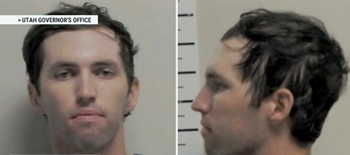
Robinson, 22, surrendered 33 hours later after his parents recognized his likeness from news images and convinced him to come to their home in Washington, Utah. Prosecutors charged him with aggravated murder on September 16 and announced they would seek the death penalty, calling it a politically motivated attack.
The court testimony on Wednesday added weeks of premeditation to what was already a damning case. Robinson allegedly left a note for Twiggs before the shooting that read: "I had the opportunity to take out Charlie Kirk and I'm going to take it." In a recorded statement played in court, Robinson reportedly said, "I had enough of his hatred, some hate can't be negotiated out." Another statement attributed to him: "I am able to grab my rifle unseen, I will have left no evidence."
He was wrong about that last part. DNA belonging to Twiggs was found on the rifle, the towel, and a screwdriver recovered from the rooftop. Twiggs, who was granted use immunity for his statements to investigators, told police that Robinson said he had a "long drive to work" the morning of the shooting. The day after Kirk was killed, Robinson told Twiggs "he wishes he hadn't done it." He also texted, "I'm sorry."
The defense has disputed the DNA evidence. Robinson has not entered a plea. The preliminary hearing, which began July 6, continued through the week with surveillance footage showing Robinson climbing over a railing onto the rooftop, crouching down, and running to a position overlooking the speaking area.
What the court record shows is not a mystery. A 22-year-old spent weeks preparing to kill a conservative activist. He engraved bullets. He wrote notes explaining his intent. He scouted the position. He fired from a rooftop at a man speaking to thousands of college students. And when it was over, he told his partner he wished he hadn't done it — but he'd already written down exactly why he was going to.
The note didn't say he snapped. It said he had the opportunity, and he took it.