
Ninety-one out of 107 voter registration forms were fraudulent. The canvassers who submitted them confessed to FBI agents. They admitted to making up names, fabricating Social Security numbers, and getting paid in gift cards based on how many applications they turned in.
And the Department of Justice said no thanks, we're good.
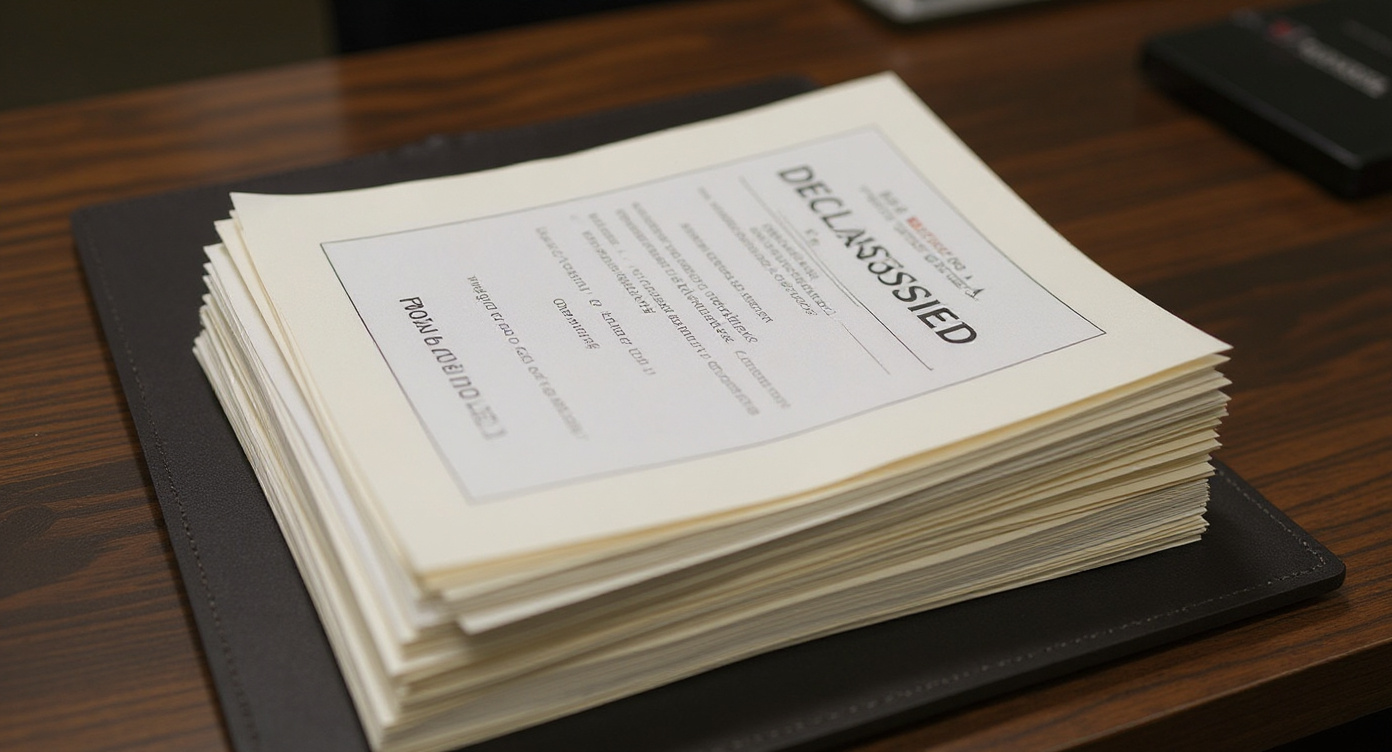
President Trump declassified a trove of FBI investigative files this week that lay bare exactly how the Bureau's probe into alleged voter registration fraud in Muskegon, Michigan during the 2020 election was systematically starved, delayed, and ultimately killed by the Biden-era DOJ. The documents — FBI-302 interview summaries and internal communications — tell a story that isn't complicated. It's just enraging.
The investigation began on October 16, 2020, when the Muskegon Police Department flagged suspicious voter registration activity tied to a company called GBI Strategies. Local police referred the case to the FBI's Detroit field office because of its national scope. Agents pulled 20 randomly selected applications for review. Seven contained completely fabricated information. Four had real names paired with mismatched biographical data. One was for someone who never appeared to have lived in Muskegon.
FBI-302 memos documented a canvasser telling investigators that leadership "told all of the employees that if they couldn't get enough applications, they should just fill them in." Another canvasser said she was instructed "to put any number she could think of for the social security number, but not to use her own social security number or date of birth" and that "she could make up names or use anyone else's name." One employee estimated GBI Strategies produced roughly 100 fake voter registrations.
So we have the admissions. We have the documents. We have the database check confirming 91 of 107 applications were bogus. Of the 16 remaining registrations tied to real people, only four had matching signatures.
Then came March 2021. The DOJ's Public Integrity Section — the Criminal Division unit responsible for election crimes — issued its ruling. A DOJ Criminal Division official wrote that "PIN does not concur at this time, barring further predication, with a specific investigation focused purely on the voter registration fraud." They limited the FBI's scope to investigating debit card payments only. Not the fraud itself. The payments.
By June 2022, an FBI agent assigned to the case raised the alarm before closure: "I am one of the agents assigned to the [redacted] investigation out of FBI Detroit. We are preparing to close the investigation." The agent reportedly cited DOJ's own election prosecution guidelines as reason the case merited continued investigation. It didn't matter. Lab and handwriting tests weren't sent to the Assistant U.S. Attorney until May 2024. By summer 2024, DOJ formally declined to prosecute. In October 2024 — weeks before another presidential election — the U.S. Attorney for the Western District of Michigan briefly reconsidered, then let it die.
The FBI had previously denied a FOIA request from Just the News in September 2023 seeking these records.
President Trump summarized the documents bluntly: "The documents state that some canvassers admitted to FBI agents that they signed voter registration forms in other people's names, submitted fraudulent registration for people who did not exist, and received gift cards tied to their number of applications that they produced. In other words, it was pay, play, and cheat." He added: "The Biden Department of Justice slow-walked the investigation and killed it."
Trump has asked the FBI Director to reopen the probe to ensure a full investigation.
The timeline is what matters here. Local cops flagged it in October 2020. The FBI confirmed mass fraud through interviews and database checks. DOJ restricted the investigation in 2021. The Bureau tried to close it in 2022. Testing dragged until 2024. No charges were ever filed. Four years of bureaucratic suffocation applied to a case where the suspects literally confessed.
The Public Integrity Section's job is to prosecute election crimes. When presented with confessions, fabricated registrations, and a pay-for-applications scheme, they chose to investigate the gift cards instead of the fraud. That's not caution. That's a decision about what you want to find.
Pay them by the application. They fabricate the applications. Nobody gets charged. The registrations stay on the rolls. That's not a failure of the system. That's the system working exactly as someone designed it.