
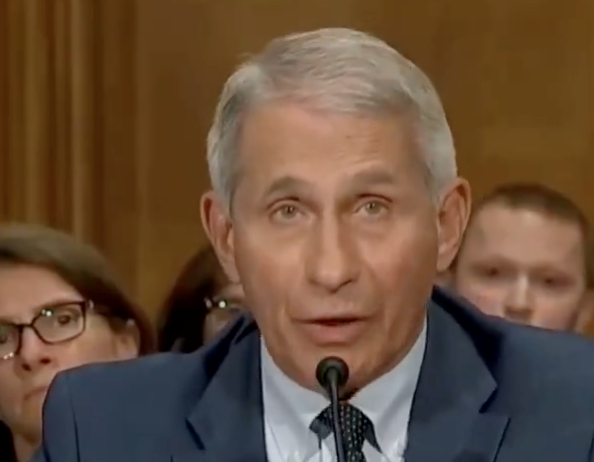
"Big Chinese visitor day — Hosted Gao Fu (George) here at NIH. He is the Director General of the China CDC. Very smart and nice guy." That's Dr. Anthony Fauci, in his own handwriting, gushing about the head of Chinese disease control while the rest of America was trying to figure out why a novel respiratory virus kept popping up in Wuhan.
The same diary had considerably less generous things to say about his actual boss.
Senator Rand Paul, Republican chairman of the Senate Homeland Security and Government Affairs Committee, released the diary entries this week — a PDF package titled "2026.10.6_Fauci-Diary-Release-Missing-Years_Full-Package" — and the contents read exactly the way you'd expect from a man who spent four decades in Washington collecting a government paycheck while privately despising the people who signed the checks.
During the January 2019 government shutdown, Fauci wrote that Trump "is acting more and more bizarre. Should be impeached, but Dems are rightfully concerned that this will galvanize his base." Strategic impeachment advice from America's top infectious disease doctor. Noted.
The diary entries span the 2016 election and beyond. After Trump's September 26, 2016, debate performance, Fauci wrote: "Trump made a fool of himself in the debate." When the Access Hollywood tape surfaced in October 2016, he added: "Trump caught in Tape denigrating women. Anyone else would be disqualified by this; however, his people still support him." You can almost hear the bewilderment dripping off the page — the career bureaucrat genuinely unable to comprehend why sixty-three million Americans didn't take their voting cues from him.
Post-election, the tone shifted from contempt to clinical observation: "Trump continues to spout outrageous things on one day and seem reasonable on the next day." When Congressman Tom Price, a Republican from Georgia, was nominated for HHS Secretary, Fauci's review was surgical: "He is against ACA, Medicare/Medicaid, abortion, anti-science and he is an orthopedic surgeon. Will give him a chance, but let us see." Anti-science. From the man who funded gain-of-function research and then lied about it under oath.
But the China entries are what make the diary something more than a bureaucrat's burn book. Fauci hosted Gao Fu, the Director General of the Chinese Center for Disease Control, at NIH and called him "very smart and nice." He documented a "big Chinese visitor day" with the enthusiasm most people reserve for concert tickets. The same pages that called his own president erratic and bizarre treated Chinese health officials like visiting dignitaries at a state dinner.
Then there's the part nobody was supposed to find out about. On July 22, 2016, Fauci's computer was hit by a ransomware attack. His own words: "I was attacked by 'Ransonware' and my entire unprotected folder (CDrive – Word Files) was encrypted. Luckily, I had a backup of most of my historical daily notes and my autobiography was on a separate, nonaccessible folder. However, I lost all of the letters that I have ever written as well as other important documents in the Word Files folder."
The man who wanted to lock down America couldn't lock down his own C drive.
It gets worse. Fauci admitted in the diary that the encrypted folder contained confidential files: "I had originally created this for the confidential files that I made right after the anthrax attacks since I did not want them accessible to anyone. However, I soon began putting other important documents into that folder — Bad idea!!!" Three exclamation points. The head of NIH's infectious disease division lost classified anthrax-related documents to ransomware and the public is only learning about it now, from a diary his own Senate overseers had to pry loose.
Under the Federal Records Act, willful concealment or destruction of federal records carries a maximum penalty of three years in prison and a $2,000 fine. Fauci's diary describes exactly that — important government documents, gone, never reported. But President Biden's pardon, covering all potential federal offenses from 2014 to 2024, functions as a blanket shield.
Senator Paul said he intends to challenge the pardon's validity: "I think we should challenge the pardon, because it's an extraordinary pardon. It's a pardon not for a specific crime, and it's a pardon over a 10-year period. It's the same that he got, the same thing Hunter Biden got." Paul's committee has already referred Fauci for contempt of Congress after he invoked the Fifth Amendment during an August 2024 hearing — raising the constitutional question of whether Fifth Amendment protection still applies after a blanket pardon removes the risk of prosecution.
Fauci spent forty years as America's most powerful unelected health official. He testified before Congress about COVID death rates while his private estimates told a different story. He praised the Chinese CDC director by name while trashing the American president by title. He lost confidential government files to a cyberattack and never told anyone.