
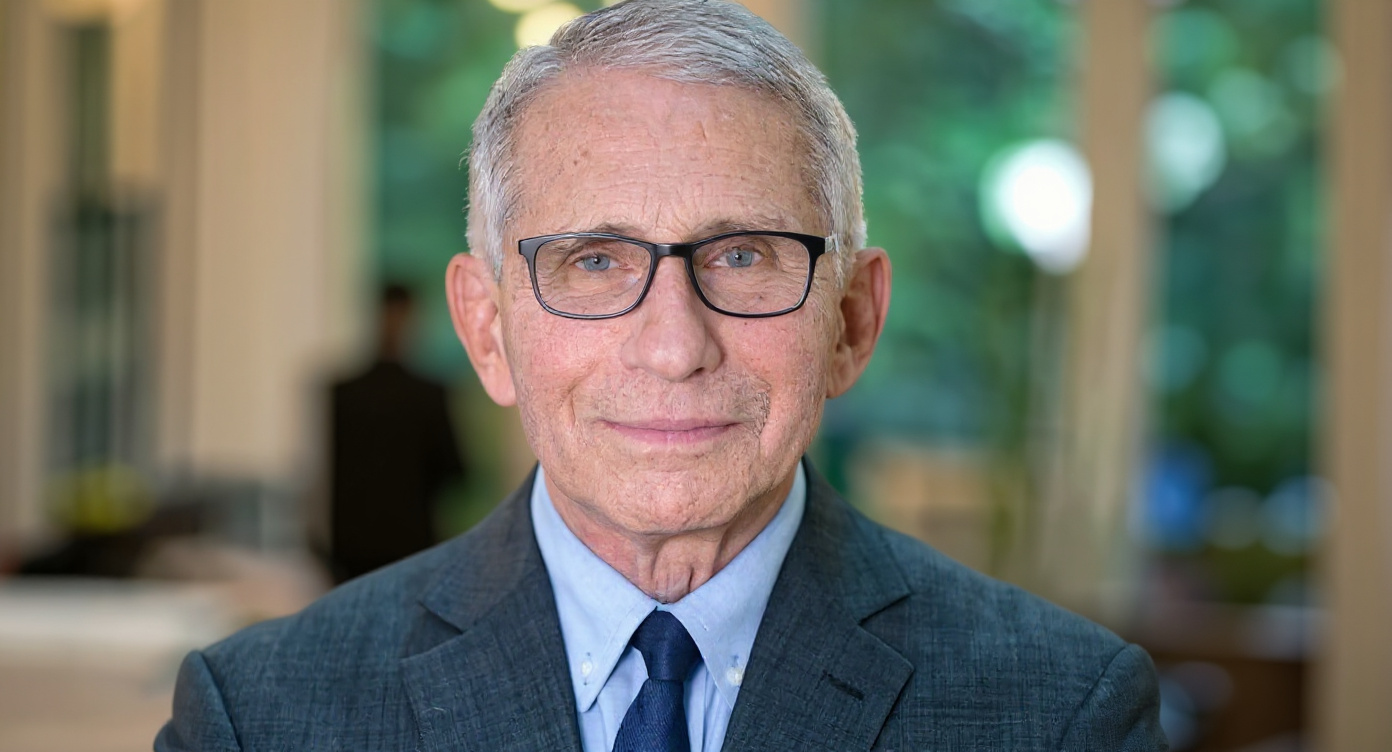
Anthony Fauci agreed to testify before the Senate Homeland Security and Governmental Affairs Committee. Then, last week, the former National Institute of Allergy and Infectious Diseases director sent word that he had changed his mind. He would not, in fact, be showing up voluntarily.
So Senator Rand Paul removed the word "voluntarily" from the equation.
The Senate Homeland Security chairman issued a subpoena compelling Fauci to testify in public next month — July 2026 — in what will be the most significant moment yet in the years-long COVID origins investigation. Paul announced the move plainly, "Last week, Anthony Fauci notified us he will NOT voluntarily testify before the Senate Homeland Security and Governmental Affairs Committee, even though he had previously agreed to do so. Therefore, today I have issued a subpoena requiring him to testify before the Committee, in public, next month."
The timeline matters. Paul has been pursuing Fauci since the pandemic itself, pressing him in Senate hearings over whether the National Institutes of Health funded gain-of-function research at the Wuhan Institute of Virology in China. Fauci's answers during those exchanges — delivered with the calm certainty of a man who believed he'd never face consequences — have been the subject of allegations that he provided false testimony to Congress.
Those allegations have only gained weight. Former Director of National Intelligence Tulsi Gabbard declassified a report on her last day in office last week that bears directly on the question of COVID's origins and the lab leak hypothesis. The timing of Fauci's sudden reluctance to testify and Gabbard's declassification is the kind of coincidence that doesn't feel particularly coincidental.
Fauci's legal position has always rested on a careful distinction: he didn't fund gain-of-function research because the research he funded didn't meet the technical definition of gain-of-function as HIS agency (and only his agency) defined it. That's the kind of defense that works in a bureaucratic memo. Under oath, with a senator who has spent years building the evidentiary record, it tends to sound like what it is — a man defining his way out of accountability.
The former NIAID director isn't facing a friendly committee anymore. He's not appearing on a cable news program where the host nods along. He's been subpoenaed to appear before a chairman who has publicly accused him of lying to Congress, in a hearing that will be open to the public, on questions where the classified record is now partially declassified.
Paul has the gavel. He has subpoena power. He has years of documented exchanges where Fauci's statements can be measured against what the intelligence community and scientific record now show. And Fauci, who spent the pandemic telling America to "follow the science," just tried to avoid the one setting where he'd be legally required to answer questions about whether he did.
He agreed to come. Then he didn't. Now he doesn't have a choice.
The subpoena doesn't care whether Dr. Fauci finds the timing convenient. That's rather the point of a subpoena.