
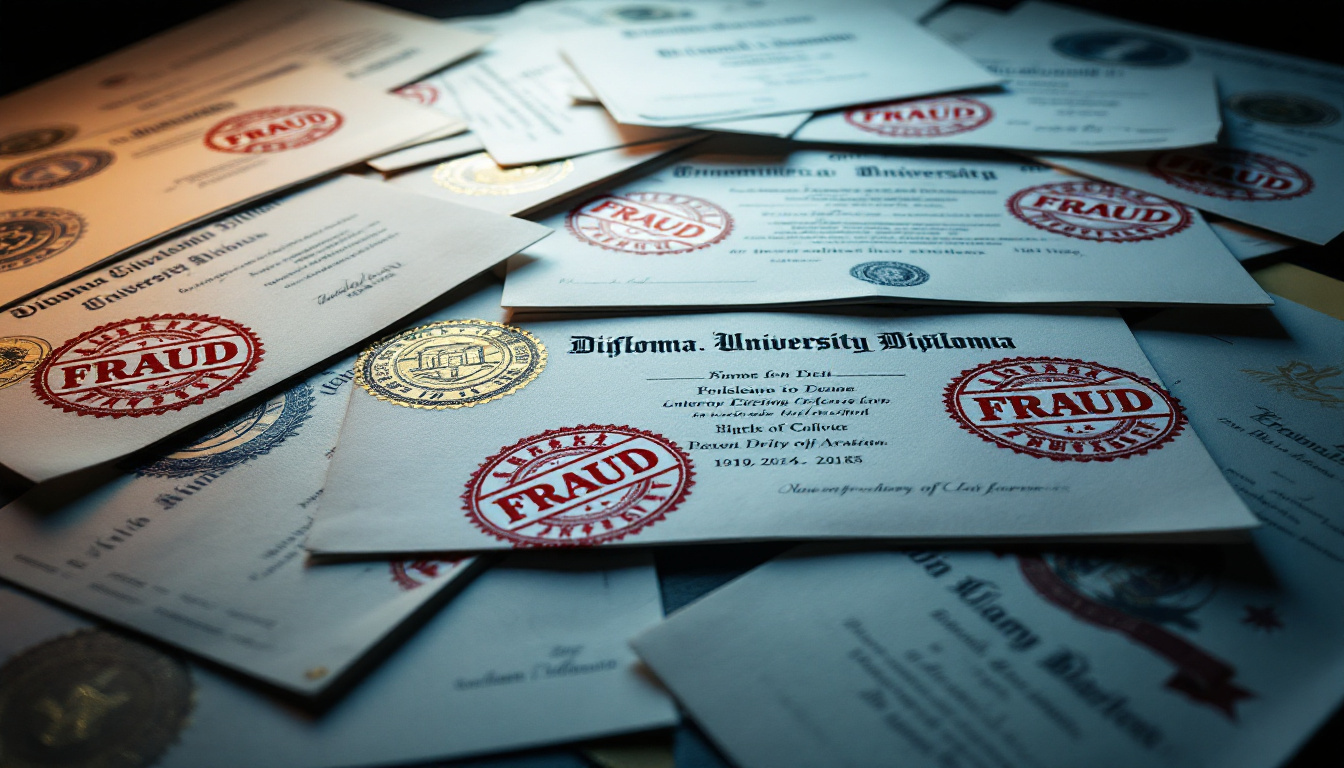
Indian law enforcement just blew the lid off one of the most jaw-dropping visa fraud operations in recent memory — a sprawling network of 28 universities churning out approximately 100,000 bogus certificates so foreign applicants could waltz into American jobs through the H1B visa program. And we're supposed to believe our immigration system is working just fine.
One hundred thousand fake degrees. An industrial-scale diploma mill selling your job to the lowest bidder for about $1,400 a pop.
These weren't your garden-variety diploma mills operating out of a strip mall. The 28 universities involved in the racket used stolen seals, fabricated transcripts, and fake accreditation stamps to produce credentials that looked real enough to fool American employers and — apparently — our crackerjack bureaucrats at USCIS. The counterfeit degrees spanned fields including medicine, nursing, and engineering. You know, low-stakes stuff like keeping people alive and making sure bridges don't collapse.
One single university is suspected of issuing over 36,000 fraudulent documents all by itself. Let that sink in. That's not a side hustle. That's a Fortune 500 of fraud.
The H1B visa program requires applicants to hold at least a bachelor's degree or equivalent in a "specialty occupation." That requirement is supposed to be the gatekeeper — the thing that ensures we're importing genuine talent America actually needs. Instead, it turns out the gate was made of cardboard and the lock was a suggestion.
And here's the part that should make every American worker's blood boil: roughly 80 percent of H1B hires in recent years went to junior or entry-level positions. Read that again. We're not importing irreplaceable geniuses. We're importing cheaper labor with fake paper to do jobs Americans can absolutely do — they just cost more because they expect things like fair wages and, you know, real qualifications.
This isn't even a new problem we're just discovering. A consular report from 2005 to 2007 found that nearly 90 percent of Indian H1B applications during that period involved some kind of fraud. Ninety percent. We had the receipts two decades ago and the system just shrugged and kept stamping approvals.
The fraud pipeline is elegantly corrupt. Universities print fake degrees. Applicants buy them for $1,400. Employers file H1B petitions citing those degrees. USCIS processes the petitions. American workers get passed over. Everyone wins except the people whose country this actually is.
Texas Attorney General Ken Paxton has been sounding the alarm about the downstream effects of unchecked immigration fraud — from housing market pressure to wage suppression — and this bust proves exactly what he's been warning about. When you flood the labor market with credentialed frauds, the people who played by the rules and earned real degrees get punished for their honesty.
The real villains here aren't just the 28 universities cranking out phony diplomas. It's the entire system that let this happen at scale — the employers who didn't ask questions because the labor was cheap, the bureaucrats at USCIS who rubber-stamped applications without verification, and the politicians who've spent years telling us H1B is essential for American competitiveness while it was being gamed right under their noses.
So the next time some tech CEO testifies before Congress about the "critical shortage" of qualified American workers, remember this number: 100,000 fake degrees. The shortage isn't real. The fraud is.