
Abdul Beckwith, a regional field organizer for Michigan Democratic Senate candidate Abdul El-Sayed, sat across from an undercover reporter and calmly explained how the campaign receives money from overseas. "He has people from overseas that donate to him," Beckwith said. Asked whether that's legal, Beckwith didn't hesitate: "No, it is not allowed."
Then he explained how it works anyway.
The O'Keefe Media Group released the undercover footage on October 19. Beckwith described a layered donation scheme: "People overseas give money to him. And then he gives money to you. It's that type of thing." When the undercover journalist pressed on the legality, Beckwith shrugged it off. "Everybody does it!"
Federal law prohibits foreign nationals from contributing to any U.S. political campaign. That's not a gray area. That's not a technicality. It is one of the clearest lines in election law.
You can watch the undercover confession here in case you missed it earlier this week
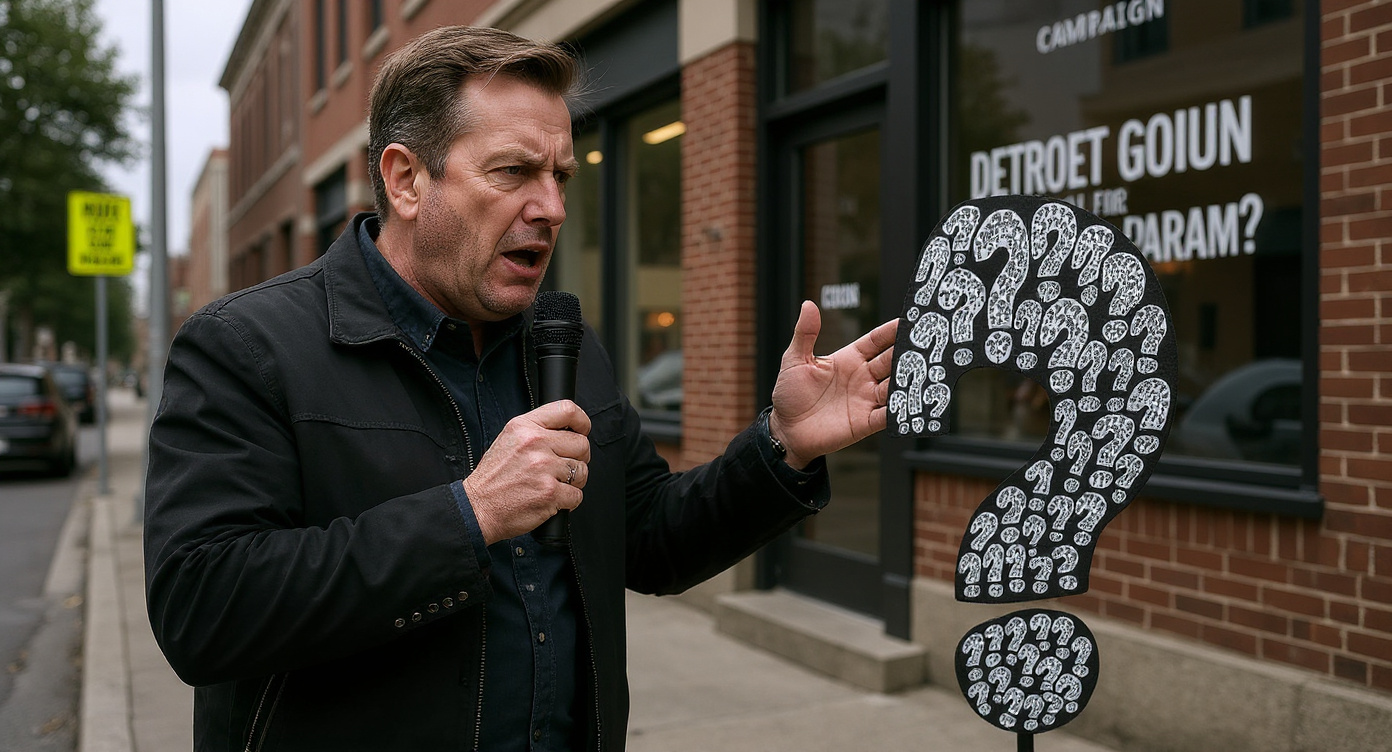
What happened next turned a campaign finance story into something louder. On October 20, journalist James O'Keefe approached El-Sayed's team to ask about the undercover footage. Beckwith, according to The Gateway Pundit, physically confronted O'Keefe and had to be restrained by others present. The exchange was captured on video.
"I don't give a f*ck who you are, bro!" Beckwith screamed while being held back.
Another campaign staffer tried a different approach: "We're going to ask for one more time and then we're going to have to call the cops." Call the cops on the journalist. Not on the staffer who just described an illegal foreign donation pipeline on camera.
O'Keefe filed an assault report with Michigan law enforcement on October 21.
The El-Sayed campaign's response to the footage was to deny that Beckwith was employed by the campaign. The undercover video identifies him as a regional field organizer. They confronted him at El Sayed's campaign office. Those two things cannot both be true.
This is the pattern. The undercover tape surfaces. The subject on tape describes something plainly illegal. The campaign denies the person exists. The person on tape tries to physically prevent the follow-up question. And by Thursday, the whole thing is supposed to be a "deceptively edited" misunderstanding.
Beckwith didn't say "I think" or "maybe" or "I've heard." He described a specific mechanism — money from overseas, routed through intermediaries, arriving at the campaign. He acknowledged it was illegal. He said everybody does it.