
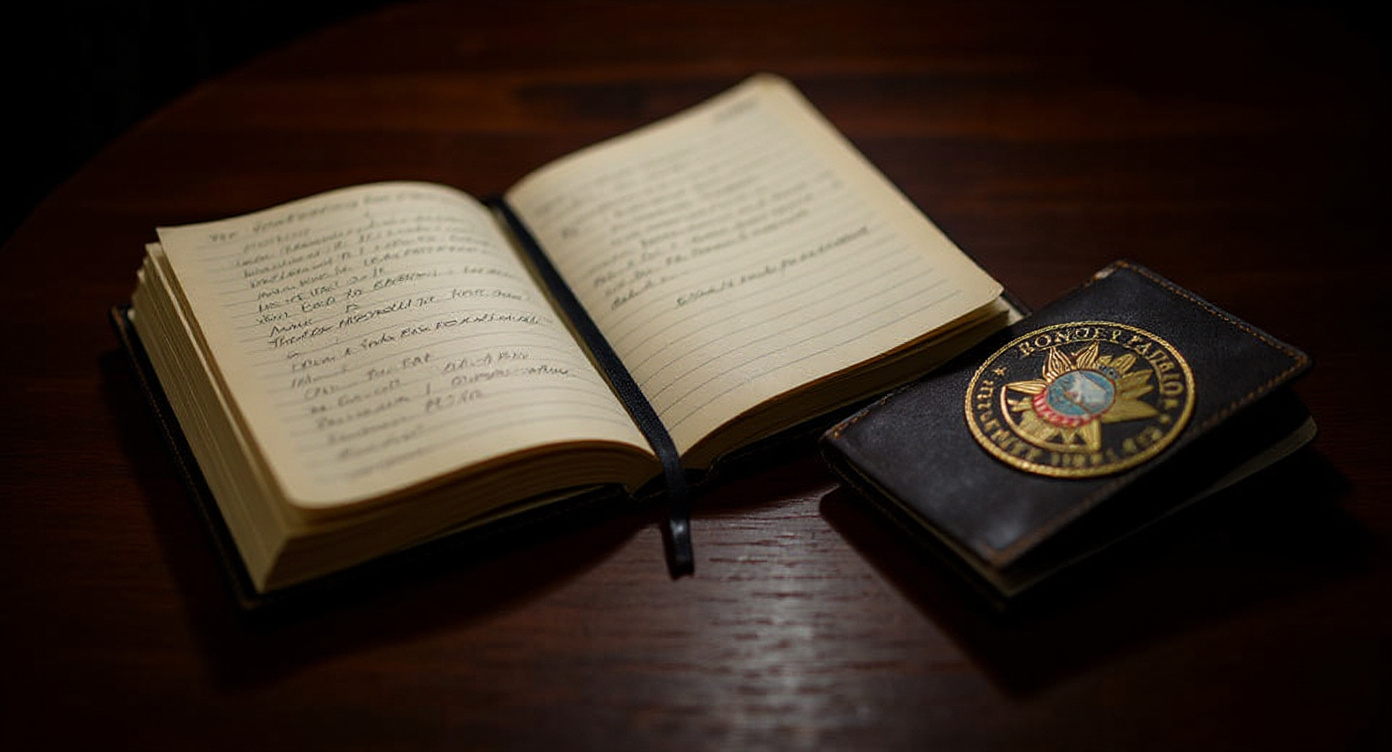
On November 2, 2010, Border Patrol agent Brian Terry wrote three words in his personal journal: "AK-47 in crate." Two weeks later, on November 16, he logged another entry documenting surveillance activity. Weeks after that, he was dead — killed with weapons the federal government had deliberately allowed to cross the border into the hands of Mexican cartel members.
The journal surfaces 16 years after Terry's murder and adds a layer of evidence to what remains one of the most damning federal law enforcement scandals in modern American history. Operation Fast and Furious — launched in September 2009 under the Obama administration — was a Bureau of Alcohol, Tobacco, Firearms, and Explosives program that intentionally allowed firearms to be trafficked into Mexico. The stated goal was to track the weapons to senior Sinaloa cartel figures. The actual result was that the ATF lost track of the guns, and two of them turned up at the scene where Brian Terry was shot and killed.
Kent Terry, Brian's brother, explains further what the journal entries suggest. "We don't know exactly why Brian wrote those things. We don't know if he was onto something or knew about something. That's the question we're trying to figure out — or if he knew about it and he didn't know the depth of it."
That uncertainty is the point. A field agent was documenting AK-47s in crates and conducting surveillance in the weeks before his death, while the same federal government he worked for was running a program that put those weapons into cartel hands. Whether Terry had stumbled onto Fast and Furious directly or was simply doing the job ATF leadership had already compromised — the timeline is devastating either way.
Kent Terry also described what happened after his brother was killed. Representatives from Border Patrol came to the family. Something didn't sit right. Kent recalled being told by someone with knowledge of the case: "But what they're telling you what happened to your son really didn't happen to your son the way they're telling you."
The cover-up ran upward. Memos about the operation were sent to President Barack Obama's office as early as July 2010 — months before Terry's murder. Attorney General Eric Holder became the first sitting cabinet member held in contempt of Congress for refusing to turn over Fast and Furious documents. Dennis Burke, the U.S. Attorney for Arizona, resigned over the scandal. The DOJ and FBI spent years controlling the narrative while a dead agent's family fought for answers.
Seven men were eventually sentenced for Terry's murder. Jesus Rosario Favela-Astorga, the last to face justice, received 50 years in prison in 2022. The weapons that killed Terry traveled a pipeline running through Honduras, Guatemala, and Mexico — a pipeline the ATF was supposed to be monitoring but had instead been feeding.
Michelle Terry, Brian's sister, put it plainly: "He was a true, dedicated, American patriot."
What makes the journal so significant isn't just what it contains. It's what it destroys. The government's posture for 16 years has been that Fast and Furious was a well-intentioned operation that went sideways — a bureaucratic miscalculation with tragic consequences. Brian Terry's own notes suggest the danger was visible at the ground level, in real time, to the very agents the program was supposed to protect.
He gave them his service, his surveillance, and his life. The agency gave his family a story that wasn't true.