
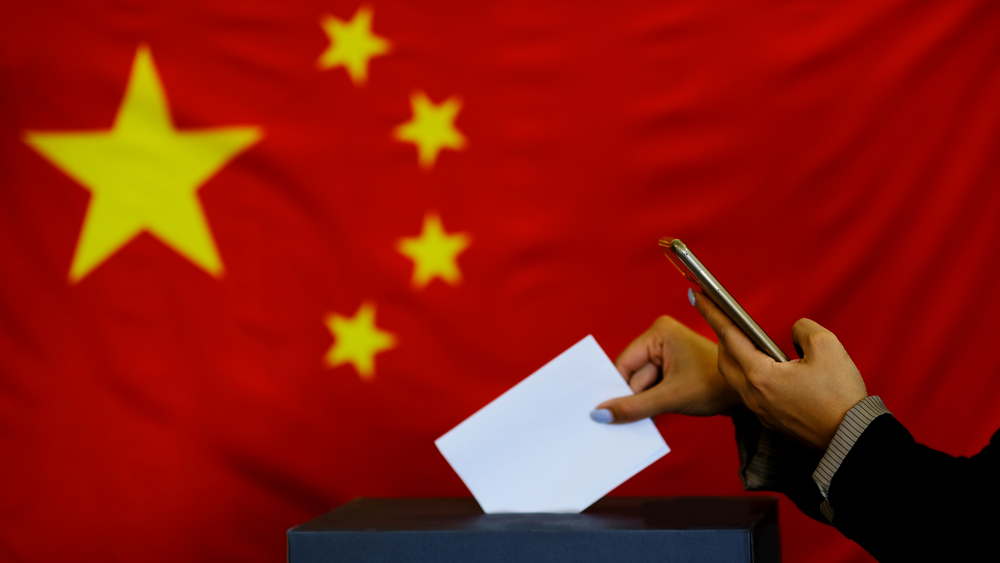
Two hundred and twenty million. That's how many American voter registration records Chinese hackers stole, according to declassified intelligence President Trump revealed during a primetime address on Wednesday night. Not a hundred. Not a thousand. Two hundred and twenty million individual voter files — from at least 18 state voter rolls.
The intelligence community had this information. They just didn't think you needed to know.
Trump called it "the largest compromise of election data in history," and the math backs him up. There are roughly 240 million registered voters in the United States. China got to 220 million of them. That's not a targeted hack. That's a census.
And it didn't start in 2023. The first breach was detected as far back as spring and summer of 2020, when Chinese intelligence quietly acquired tens of millions of voter files. The 2023 operation scaled it to 220 million. By the time most Americans heard the word "interference," Beijing had been building its database of the American electorate for years.
The data included names, addresses, dates of birth, and in some cases partial Social Security numbers — everything you'd need to map, model, or manipulate an electorate. Trump declared the system "broken and vulnerable," a phrase that would have gotten any Republican banned from polite company roughly eighteen months ago. And the voter files were only part of the picture. Declassified findings also confirmed vulnerabilities in voting machines on at least five separate occasions since 2020 — vulnerabilities DHS recently confirmed still exist. Separately, approximately 278,000 non-citizens were found on voter rolls in mid-sized states, identified through foreign Social Security numbers or foreign drivers' licenses.
Remember 2020 through 2024? Saying the words "election integrity" out loud got you fact-checked, deplatformed, and compared to domestic terrorists. Congressional committees held hearings about the "dangerous myth" of election vulnerability. Media panels solemnly agreed that questioning election security was itself a threat to democracy.
Meanwhile, Beijing was downloading voter files like they were grabbing a free PDF.
We spent four years being told the real election threat was "Russia Russia Russia." Congressional investigators burned tens of millions of dollars chasing Facebook memes and alleged Kremlin bot farms. Cable news dedicated thousands of hours to the theory that a few hundred thousand dollars in Russian social media ads swung a presidential election.
China, apparently, skipped the memes and went straight for the raw data — 220 million records' worth.
The counter-spin is already being drafted: the data was "mostly public" anyway, no votes were changed, and the real story is Trump "politicizing intelligence." But public voter files don't include partial Social Security numbers. And a hostile foreign intelligence service doesn't steal 220 million records for fun.
Eighteen states. Not one or two swing districts. Not a single county clerk's office with a weak password. Eighteen entire state systems compromised — and the people who had access to that classified assessment spent years telling the public that concerns about election security were unfounded.
The classified briefings existed. The intelligence was gathered, analyzed, and filed. According to declassified findings, it was concealed not just from the public, but from President Trump and Congress. One official inside the FBI was described as running what sources called "a shadow government" specifically to keep intelligence about China's election meddling from becoming known. CISA Director Jen Easterly read the briefings. FBI Director Christopher Wray read the briefings. DHS Secretary Alejandro Mayorkas read the briefings. The Biden Justice Department, meanwhile, spent four years blocking FBI indictments related to alleged ballot fraud connected to a voter canvassing operation — indictments the FBI had prepared and was ready to bring.
Then they walked into press conferences and told the country that American elections were "the most secure in history."
That phrase aged about as well as "fifteen days to slow the spread."
The question isn't whether China wanted this data — the question is how many people in Washington knew the election system had been breached by a foreign adversary, actively suppressed the intelligence, and chose to say nothing because admitting it would validate the wrong political team.
Two hundred and twenty million records. Eighteen states. Years of silence. The system wasn't just broken. It was broken and classified.