

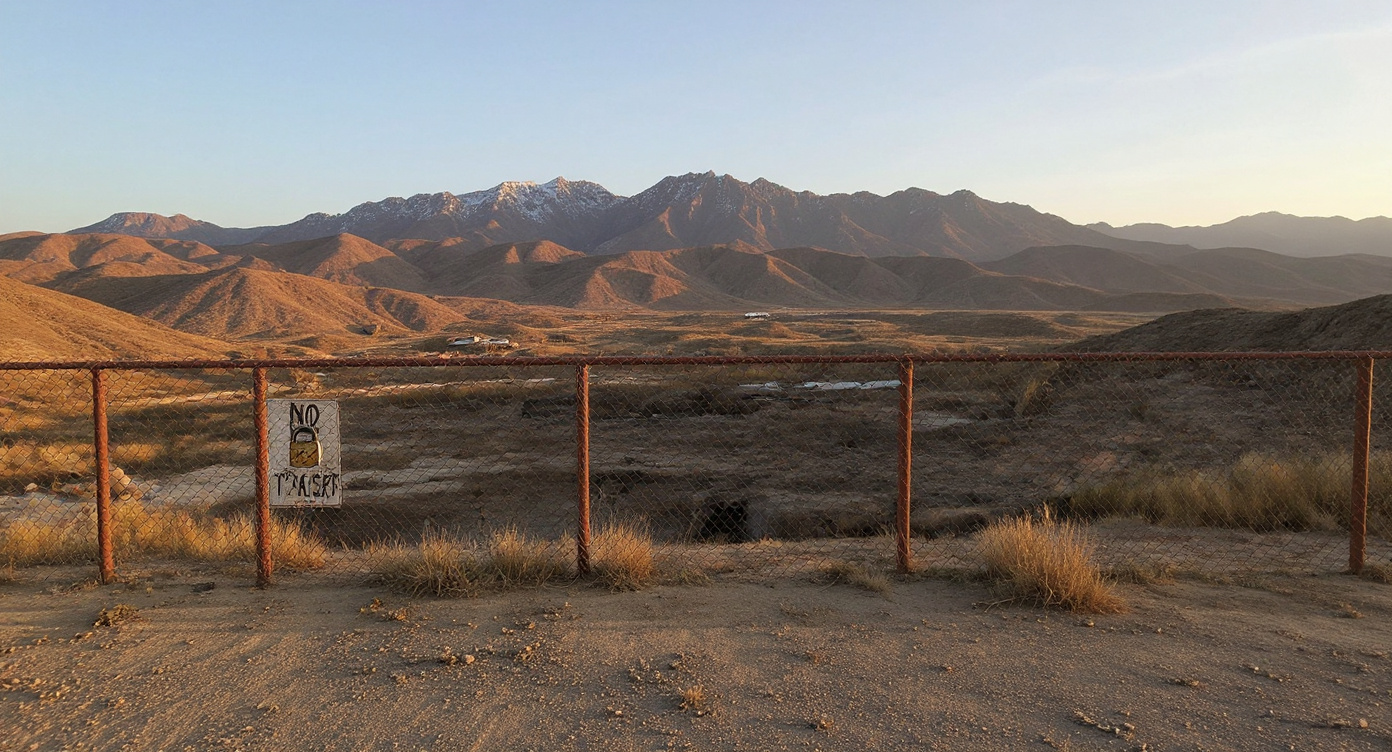
The Energy Foundation China — run by a man named Zou Ji, who previously served as deputy director general of China's National Center for Climate Change Strategy and International Cooperation — has funneled $6.5 million to Earthjustice since 2003. Earthjustice is one of the environmental groups currently suing to block the reopening of the Colosseum Mine in California's Mojave Desert, a rare earth mineral operation the Trump administration greenlit to break Beijing's chokehold on the 17 metallic elements the U.S. military and tech sector can't function without.
So a foundation with a former Chinese government official at the helm has been bankrolling the same legal outfit now trying to keep American rare earth minerals in the ground. On behalf of the environment, naturally.
The money trail, unearthed in a June 2025 report by State Armor and detailed by Just The News, runs deeper than a single grant. The Energy Foundation launched in 1991 with a $50 million commitment from the MacArthur Foundation, which has since poured $102,266,748 into the organization. In 1999, the foundation opened a Beijing office. By 2019, the operation split into two technically independent charities — the U.S.-based Energy Foundation and Energy Foundation China — transferring $57.7 million in net assets during the 2020 reorganization. The "independent" part does a lot of heavy lifting when both organizations share the same origin story and the Chinese arm is led by a former official of Beijing's National Development and Reform Commission.
The National Parks Conservation Association, the other plaintiff in the lawsuit against the Colosseum Mine, received $2.21 million in Energy Foundation grants between 2011 and 2024. The grants started with $100,000 in 2011, grew to $250,000 by 2012, hit $750,000 across 2015 to 2019, and have continued at roughly $310,000 annually through 2023. NPCA and Earthjustice argued the mine "broke numerous federal laws protecting national parks from mining impacts." A Ninth Circuit judge agreed enough to issue a preliminary injunction on August 10, 2026. On October 30, the judge refused to lift it.
The mine sits idle. China's market dominance remains intact.
Nine House Republicans led by Rep. Lance Gooden wrote to then-Attorney General Pam Bondi in November 2025 requesting an investigation. Their letter was blunt: "Environmental groups like The Energy Foundation and the recipients of their grant money are directly empowering China to the detriment of U.S. national security." Twenty-six state attorneys general filed a similar request the following month, on December 16, 2025. The House Oversight Committee, chaired by Rep. James Comer of Kentucky, sent its own letter in September 2026, with Rep. Eric Burlison of Missouri flagging the national security implications.
Sen. Ted Cruz of Texas has been pushing from the Senate Judiciary Committee side, though his spokesperson noted that "what's not publicly demonstrated (so far) is a direct, documented grant-to-lawsuit pipeline." That qualifier matters — it's the difference between circumstantial and courtroom-ready. But the circumstantial picture is a foreign adversary's former government official running a foundation that sends millions to the exact organizations filing suit against American mineral independence. The qualifier is doing a lot of work.
This is what a modern supply-chain attack looks like. China controls the processing of the rare earth minerals that go into fighter jets, missile guidance systems, and every piece of advanced electronics the Pentagon buys. The Colosseum Mine, decommissioned in 1993, was specifically targeted for reopening because the deposits are already mapped and the infrastructure existed. The Trump administration's critical minerals push identified it as a strategic priority.
Beijing didn't need to send diplomats or threaten tariffs. They funded American nonprofits that filed American lawsuits in an American court, and an American judge shut the mine down.
The Ninth Circuit preliminary injunction remains in effect. The Colosseum Mine remains closed. China's rare earth market share remains unchallenged. The Energy Foundation's tax-exempt status remains active.