
A $120,000 fraudulent-misrepresentation award. A $10,000 wiretapping claim on top. A grand total of $130,000 in damages — all for the crime of sending an undercover reporter into a Democratic operative's office and filming what he said out loud to someone he thought was on his team.
The U.S. Court of Appeals for the D.C. Circuit just erased all of it.
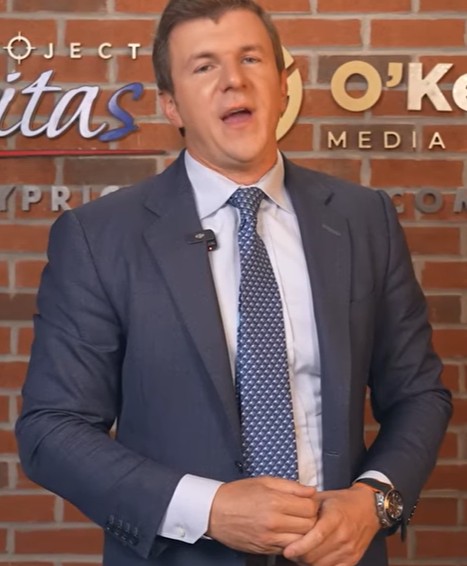
The case, Democracy Partners v. O'Keefe, stems from a 2016 undercover investigation by James O'Keefe and his then-organization Project Veritas. An undercover reporter named Allison Maass spent eight days embedded inside Democracy Partners, the political consulting firm run by Democratic operative Robert Creamer. Maass posed as a fictional donor's niece working as an unpaid intern — answering the door, clipping news, inventorying signs, delivering packages. Standard intern fare.
What came out the other end was a three-part video series called "Rigging the Election." The footage showed Democratic operatives discussing tactics that, to put it charitably, did not play well in public. Creamer's outfit sued. A lower court awarded $130,000 in damages.
The D.C. Circuit's 2-1 panel opinion, authored by Judge Karen LeCraft Henderson and joined by Senior Circuit Judge Harry Edwards, ran 38 pages. The core finding was straightforward: "a jury cannot use an unprotected act as a back door to make journalists pay for the damage caused by publishing a protected news story."
The court didn't just say O'Keefe won on a technicality or a procedural error. It said the entire theory of damages — punishing a journalist financially for what his reporting revealed — runs headfirst into the First Amendment. The $120,000 fraudulent-misrepresentation claim was built on the idea that Maass lied about who she was to gain access. The court's response, essentially, was: yes, and?
Judge Robert Wilkins dissented in part, but even the dissent couldn't salvage the judgment. The majority's holding stands.
O'Keefe posted on social media after the ruling: "Journalists in newsrooms everywhere should be celebrating this win for the 1st amendment. Instead, crickets." He's not wrong. The same industry that canonizes the Pentagon Papers and Watergate's Deep Throat went radio silent when a conservative journalist's undercover work got the same constitutional protection.
The strategy was never really about $130,000. Democracy Partners didn't sue James O'Keefe because they needed the money. They sued because legal fees, depositions, and years of litigation are a weapon. You don't have to win the case if you can bleed the defendant dry before it's over. It's the same playbook that's been run against conservative media, activist organizations, and anyone else who publishes something the institutional left would rather you hadn't seen.
This ruling has implications well beyond O'Keefe. If a jury verdict can't be used to make reporters pay for the consequences of their reporting, the lawfare model loses its sharpest tooth. The precedent applies to any undercover investigation where the story is true and the public interest is real.
The establishment spent years and a small fortune trying to make an example out of James O'Keefe. The D.C. Circuit just made an example out of the establishment instead.