
A new cancer certification hits the World Trade Center Health Program every 50 minutes. Not every 50 hours. Not every 50 days. Every 50 minutes, around the clock, another name gets added to a list that now stretches to 57,044 people — up from 3,204 a decade ago.
That's a 1,680 percent increase. And the 25th anniversary of September 11th is less than two weeks away.
The numbers, compiled by the World Trade Center Health Program and reported by the New York Post, tell a story the country hasn't fully reckoned with. For the first time since the towers fell, cancer cases among survivors — downtown Manhattan residents, office workers, students — have surpassed cases among the first responders who dug through The Pile. Survivors now account for 28,913 cases, a 4,066 percent spike from just 694 in 2015. First responders account for 28,131.
Leslie Lane, 76, worked for Merrill Lynch at the World Financial Center Building. She remembers the taste. "You could taste the dust. You could taste the fuel, greasy gas," she told the Post. "For months afterward, you could taste the fuel in the air in the back of your throat."
In 2020, she was diagnosed with thymus gland cancer — one of just 82 such cases in the program. "Thymus cancer is a very rare form of cancer. I don't drink. I don't smoke," Lane said.
She also remembers something else: "They kept telling us the air was safe. I don't think it was."
No, it wasn't. And the data is now a monument to that lie. Of the 145,275 current members of the World Trade Center Health Program, 67 percent have been certified for at least one of the program's 69 linked cancers. The national cancer rate for Americans overall is 40 percent. The gap between those two numbers is the cost of being told to go back to work, go back to school, go back to normal — while toxic dust coated everything south of Canal Street.
The rare cancers are what stand out. Neuroendocrine cancers — affecting the pancreas, bowel, lungs, and adrenal glands — have climbed to 591 cases, jumping 6 percent between March and June alone. Male breast cancer: 188 victims. Brain cancer: 163, with a 9 percent increase in just the past quarter. These aren't the cancers you get from bad luck or family history. These are the cancers you get from breathing poison for months while federal agencies waved the all-clear.
Michael Barasch, a lawyer whose firm represents thousands of people enrolled in the health program, put it plainly: "Sadly, we lose roughly two clients a day and see a new cancer certification every 50 minutes." He added: "9/11 did not end on 9/11. The cancer clock is ticking 24/7."
James Ryan, a 65-year-old electrician who worked at the PATH train's World Trade Center station and the excavation ramp, had surgery in 2019. "I got very lucky," Ryan said. Barasch noted that "early detection is the difference between life and death" — but only 15 percent of exposed civilians are even enrolled in the program.
That number should stop everyone cold. Eighty-five percent of the people who breathed that air, walked through that dust, sent their kids to Stuyvesant High School or Borough of Manhattan Community College or PACE University blocks from Ground Zero — they aren't even in the system. The U.S. Centers for Disease Control and Prevention and the National Cancer Institute are tracking what they can. But they can only track people who show up.
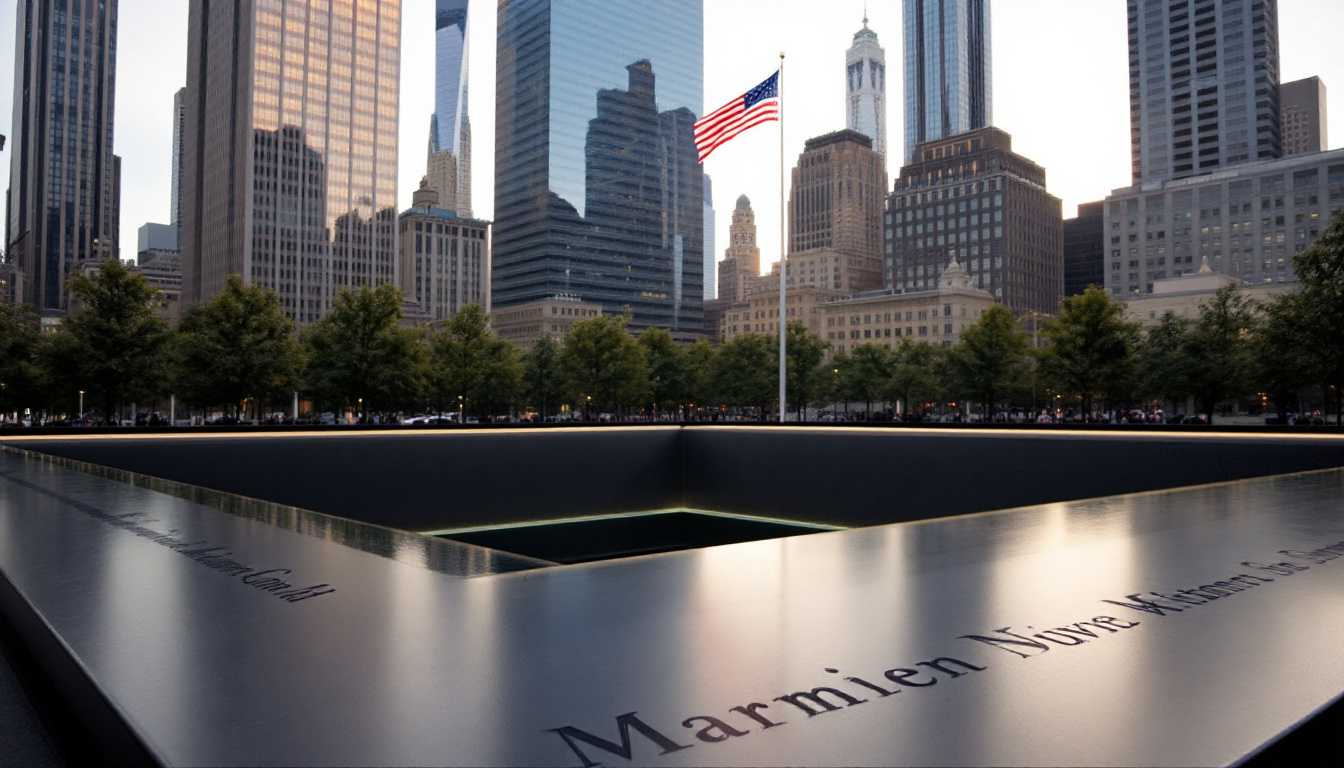
We lost 2,977 Americans on September 11, 2001. In the 25 years since, another 9,425 have died from illnesses linked to the attack. The second number just passed the first, and it's accelerating.
Two planes hit the towers. The dust never left.