
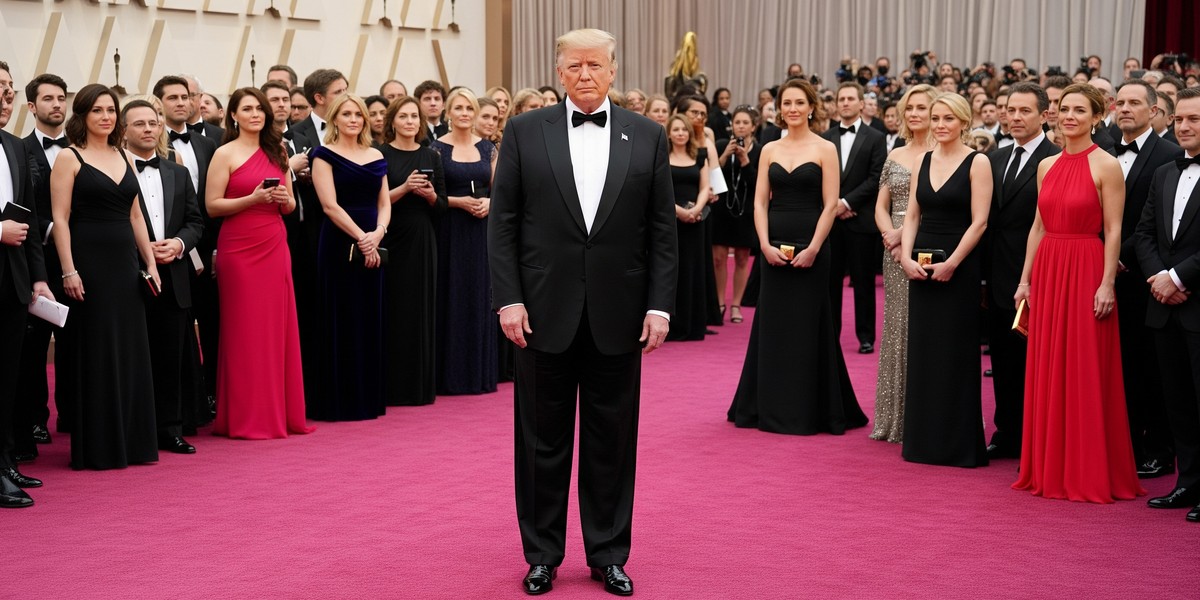
You know what nobody had on their 2026 bingo card? Hollywood siding with Donald Trump. On anything. Ever.
Yet here we are. SAG-AFTRA — the union that represents every A-lister, voice actor, and background extra in Tinseltown — just came out swinging in favor of a Trump White House AI framework. Not grudgingly. Not with a passive-aggressive press release dripping with caveats. They used the words “strongly support.”
Read that again. Hollywood’s biggest labor union is backing a Trump policy. Somewhere, a studio executive just choked on his oat milk latte.
The Framework That United Enemies
On March 20, the White House dropped a national policy framework for artificial intelligence aimed at setting uniform federal standards for AI regulation — and preempting states from cobbling together their own patchwork of rules. The six-pronged outline covers everything from child safety to permitting standards for AI data centers.
But the part that got Hollywood’s attention? Protections for human creatives. The kind of protections actors, writers, and artists have been screaming about since AI companies started vacuuming up their work, their voices, and their faces like some kind of digital identity theft operation running on server farms.
And here’s where it gets interesting. SAG-AFTRA didn’t just nod politely. They rolled out the red carpet.
“SAG-AFTRA welcomes the administration’s National Policy Framework for Artificial Intelligence and its recognition that America’s leadership in AI must go hand in hand with strong protections for human creativity,” the union said.
They went further:
“Our members’ performances, voices and likenesses are not raw material to be used without consent; they are the product of human talent and labor, and they deserve protection.”
That’s not a reluctant handshake. That’s a bear hug.
The Real Villain Here Isn’t Trump
For years, AI companies have been scraping copyrighted material — movies, music, voice recordings, entire performances — and feeding it into their models like a buffet with no bill. Actors watched digital clones of themselves pop up in places they never authorized. Writers saw their scripts regurgitated by machines trained on their own words. The studios, predictably, saw dollar signs and fewer paychecks to write.
SAG-AFTRA made it clear they believe existing courts can handle the copyright disputes without Congress reinventing the wheel:
“We agree that disputes over the unauthorized training of AI models on copyrighted works should be adjudicated by the courts without the need for new legislation.”
That’s a rare thing — a union agreeing with a Republican administration that less legislation might actually be the answer. Mark your calendars.
Where Trump Brought the Bulldozer
Trump didn’t tiptoe around AI regulation the way most politicians do — mumbling about “stakeholders” and “ongoing conversations” while Silicon Valley runs wild. He laid down a national framework that says workers get a seat at the table and human creativity isn’t just collateral damage in the AI gold rush.
The union backed that up with teeth:
“We also believe that free-market licensing must continue to thrive, combined with SAG-AFTRA’s ability to collectively bargain for appropriate licensing terms and fair revenue shares.”
Translation: actors want to get paid when their face ends up in an AI-generated ad, and they want their union at the negotiating table. The Trump framework makes room for exactly that.
SAG-AFTRA also threw its weight behind one specific ask — calling on Congress to pass the bipartisan NO FAKES Act, which would crack down on digital replica abuse while keeping First Amendment protections intact.
“Individuals need control in a world awash with digital clones, but that control cannot harm the freedom of expression our industry relies upon to entertain and inform the world. Congress should move swiftly to enact the bipartisan NO FAKES Act.”
Strange Bedfellows, Smart Politics
The Motion Picture Association joined SAG-AFTRA in praising the framework, because when even the suits and the unions agree, you know something landed right.
This is what happens when a president actually identifies the real threat — not AI itself, but the unchecked looting of human talent by companies that treat creativity like open-source code. Trump found the one issue where Hollywood couldn’t say no, and he delivered a framework they didn’t just tolerate but championed.
The same crowd that spent years calling him every name in the book just admitted he got this one right. And if that doesn’t make you grin, nothing will.