
Something is quietly being assembled in Brussels, Beijing, and the back rooms of European capitals that nobody in Washington — not the globalists, not the bureaucrats, not even the career intelligence crowd — fully saw coming. The old order is cracking. And what’s rising from the rubble looks like nothing any of them planned for.
For decades, Europe played the obedient middle child. Took American security guarantees. Took Chinese cash. Smiled at both dinner tables, cut deals with whoever was buying, and called it sophisticated diplomacy. The continent was addicted — to U.S. military muscle on one arm and Chinese manufacturing heroin on the other. And everyone in Washington just assumed it would stay that way forever.
Then Trump started breaking furniture.
His administration took out Venezuelan dictator Nicolás Maduro in January — problem solved, regime gone, dictator in cuffs. Then came the joint U.S.-Israeli strikes on Iran in February. Back-to-back power moves. The kind of action that separates nations who are serious from nations who are theater. And Europe? Europe flinched.
The United Kingdom — our so-called “special relationship” partner — initially refused to let the U.S. use a strategic base for the Iran strikes. Prime Minister Keir Starmer eventually caved and allowed access for what he carefully called “specific and limited defensive purposes.” Trump didn’t mince words about it.
“I was very disappointed” in the prime minister, Trump told the Telegraph.
Spain went further — forbidding the U.S. from using any of its bases in the region entirely. Trump’s response was pitch-perfect.
“We could use their base if we want,” Trump said, according to Politico. “We could just fly in and use it. Nobody’s going to tell us not to use it.”
That’s not a diplomatic statement. That’s a man who understands leverage. Trump later warned Spain of a possible trade embargo. Good. Let them think about that over their jamón.
Meanwhile, French Foreign Minister Jean-Noel Barrot was on the phone with Chinese Foreign Minister Wang Yi, working toward “de-escalation” — which is European-speak for “we’d like to stay friends with everyone and take no risks whatsoever.”
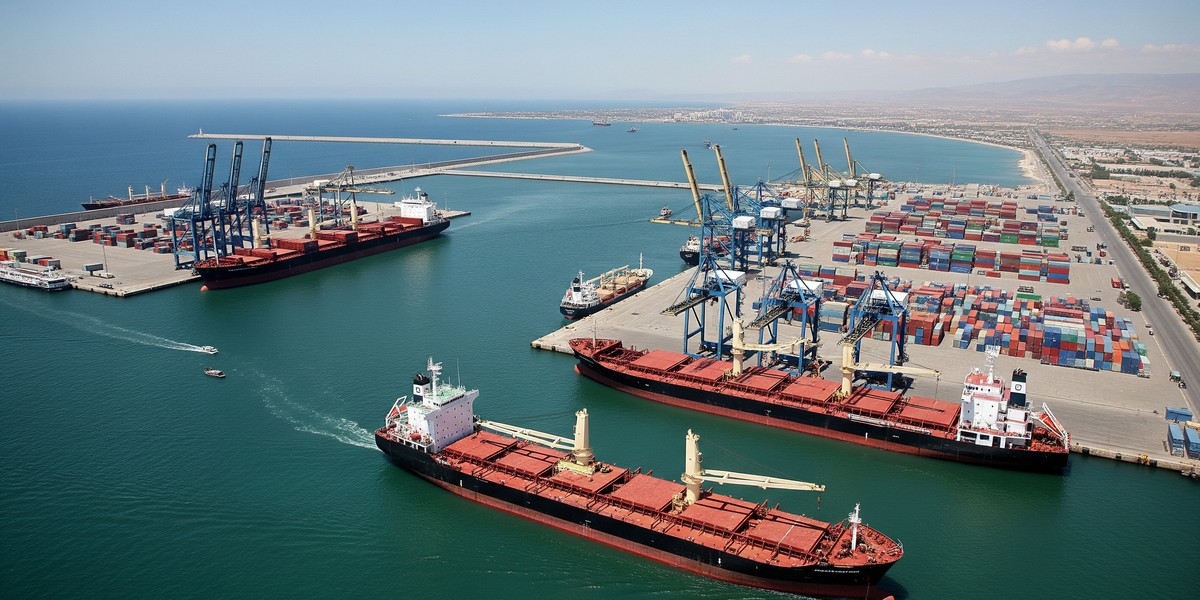
Here’s where it gets interesting. Europe isn’t just being cowardly. It’s being cornered. China has stakes in over forty-eight European ports — including Hamburg and Rotterdam. The Port of Piraeus is fully controlled by Chinese operators. Jens Gieseke of the European People’s Party put it bluntly:
“China today holds stakes in more than twenty European ports – including the Port of Hamburg and the Port of Rotterdam. The Port of Piraeus is even fully controlled by Chinese operators. This level of exposure in critical infrastructure cannot be ignored.”
Seventy-four percent of everything moving in and out of the EU goes through seaports. China doesn’t just have a foot in the door — it owns the door, the hinges, and the welcome mat. That’s not a trade relationship. That’s a hostage situation with better branding.
So now Europe is scrambling to build a third option. The European Commission’s proposed Industrial Accelerator Act wants to pump up domestic manufacturing and cut dependencies on both the U.S. and China. The CCP, naturally, published an editorial calling that “protectionist” — which is what authoritarians say when their economic stranglehold starts slipping.
Some analysts think Europe is just playing both sides to get better terms from Washington. Maybe. Europe has always been good at playing helpless to extract concessions. But the math is changing. Trump’s tariffs, his military boldness, and his zero-patience foreign policy have shaken loose assumptions that held for thirty years.
Europe is at a fork in the road — U.S. dependency, Chinese captivity, or a third path they’ve never had the spine to build before. And for the first time in a generation, nobody controls which way they turn. Not Washington. Not Beijing. Not the globalist think-tank crowd who spent decades designing a world where Europe never had to choose.
That world just ended. And nobody has a blueprint for what comes next — which means the next few years belong to whoever moves first, hits hardest, and means it.
Trump already moved. Europe is still looking for its shoes.