
When the Mexican army killed El Mencho on Sunday, the official story was straightforward: Mexican forces conducted the operation, Mexican soldiers pulled the triggers, Mexican sovereignty was respected. All technically true.
But according to Reuters, the kill shot started in Washington.
A former U.S. official told Reuters that the United States provided the Mexican government with a “detailed target package” on El Mencho — Nemesio Oseguera Cervantes, the founder and leader of the Jalisco New Generation Cartel, the most powerful cartel boss in the world since El Chapo’s capture. The intelligence pinpointed his location and gave Mexican forces what they needed to plan and execute the raid that ended his life.
No American boots on the ground. No U.S. military personnel in the operation. But American intelligence in the hands of the Mexican soldiers who carried it out. The United States didn’t pull the trigger. It loaded the gun.
The Target Package
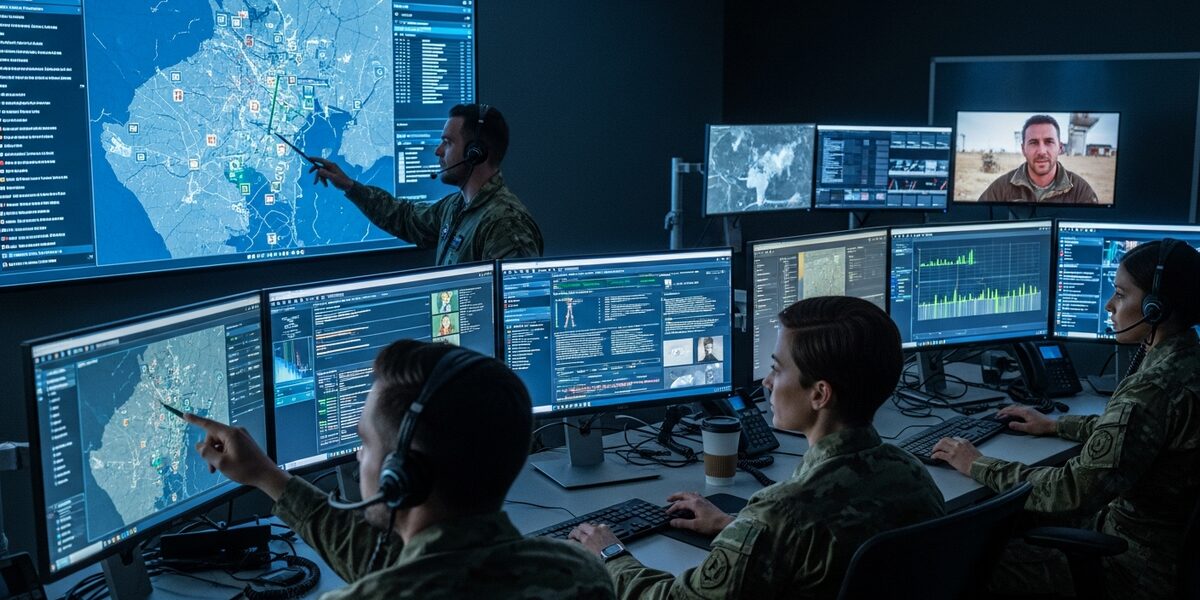
A “target package” in military and intelligence terminology is the assembled intelligence required to locate, identify, and engage a specific target. It includes signals intelligence, human intelligence, surveillance data, geolocation information, pattern-of-life analysis, and operational recommendations. It’s the difference between knowing someone is “somewhere in Jalisco” and knowing which building, which room, and which window.
The former U.S. official told Reuters that El Mencho was “near the top of the list” for U.S. targets in Mexico. Not a secondary priority. Not a long-term project. Near the top — meaning American intelligence assets had been actively tracking him, building the package, and waiting for the right moment to deliver it.
The moment came Sunday. The Mexican army acted. El Mencho is dead.
The Task Force Nobody’s Talking About
In January, the Department of War established the Joint Interagency Task Force-Counter Cartel, or JIATF-CC, under U.S. Northern Command. The task force integrates Homeland Security, the intelligence community, and federal law enforcement agencies into a single coordinated operation aimed at — in the military’s language — “eliminating these narcoterrorist networks.”
Eliminating. Not disrupting. Not degrading. Not containing. Eliminating.
The JIATF-CC represents a fundamental shift in how the United States treats the cartel problem. Previous administrations treated cartels as a law enforcement issue — something for the DEA, the FBI, and the State Department to manage through indictments, extradition requests, and diplomatic pressure. The Trump administration is treating them as a military problem — something for Northern Command, intelligence agencies, and interagency task forces to solve through the same methods used against ISIS, al-Qaeda, and every other terrorist network the United States has dismantled over the past two decades.
Whether JIATF-CC specifically provided El Mencho’s target package is unclear — U.S. Northern Command told the Daily Caller News Foundation they had “no additional comment.” But the timing is hard to ignore. The task force was established in January. El Mencho was killed in February. The intelligence was American. The result was the most significant cartel kill in years.
The Billion-Dollar Man
El Mencho wasn’t just a drug trafficker. He was a head of state in everything but title. DEA agent Kyle Mori estimated his net worth between $500 million and over $1 billion in 2019. By 2026, with seven more years of fentanyl profits, cocaine distribution, methamphetamine production, and human trafficking revenue, the real number was almost certainly higher.
He built CJNG from a regional operation into the most feared criminal organization in the Western Hemisphere. His cartel fielded armored vehicles, rocket launchers capable of shooting down military helicopters, encrypted communications networks, drone technology, and a fighting force that engaged the Mexican military in open combat.
He controlled territory. He corrupted officials. He killed competitors. And he flooded the United States with the drugs that have killed more Americans in the past decade than any foreign adversary.
The DEA had a $10 million bounty on his head. He was indicted in the United States on drug trafficking and money laundering charges. And he had evaded capture for over a decade — not because nobody was looking, but because his security apparatus, his intelligence network, and his web of corruption made him functionally untouchable.
Until the United States decided he wasn’t.
The Aftermath
El Mencho’s death didn’t end the CJNG. It destabilized it. Within hours, cartel fighters stormed the Guadalajara International Airport. Armed groups blocked highways across more than half a dozen Mexican states. Vehicles were torched. Soldiers were killed — at least 25 Mexican National Guard troops. American tourists were trapped in Puerto Vallarta hotels.
The Jalisco State Government issued a Code Red security alert. The U.S. Embassy issued shelter-in-place advisories. Greg Abbott surged Texas law enforcement to the border. And the cartel made clear, through violence, that it intends to survive its founder’s death.
This is the predictable consequence of killing a cartel king. The organization doesn’t collapse. It fragments. Lieutenants compete for control. Violence escalates. Territory is contested. And the chaos radiates outward — toward the American border, toward American tourists, toward American communities where CJNG distribution networks operate.
The question is whether the chaos is temporary — the death throes of an organization losing its center of gravity — or the beginning of a prolonged cartel war that makes Mexico even more dangerous than it already was.
The Trump Doctrine on Cartels
The El Mencho operation represents a clear pattern. The Trump administration doesn’t negotiate with narco-states. It doesn’t manage the problem. It eliminates the leadership and deals with the consequences from a position of strength.
Maduro was captured in Venezuela. El Mencho was killed in Mexico. The JIATF-CC is operational and hunting the next target on the list. And the Department of War — renamed from Defense to signal exactly this kind of posture — is treating cartels the way it treated terrorist organizations in the Middle East.
American intelligence found him. American analysts built the package. American coordination delivered it to Mexican forces. And Mexican soldiers did the rest.
A Mexican government source told Reuters there was “no U.S. personnel involvement in planning and executing the raid.” Technically correct. Operationally irrelevant. The raid wouldn’t have happened without the target package. And the target package came from Washington.
El Mencho is dead. The cartel is in chaos. The border is surging with enforcement. And the task force that helped make it happen is already working on the next name on the list.
The war on cartels isn’t a slogan anymore. It’s an operation. And it’s producing results.