

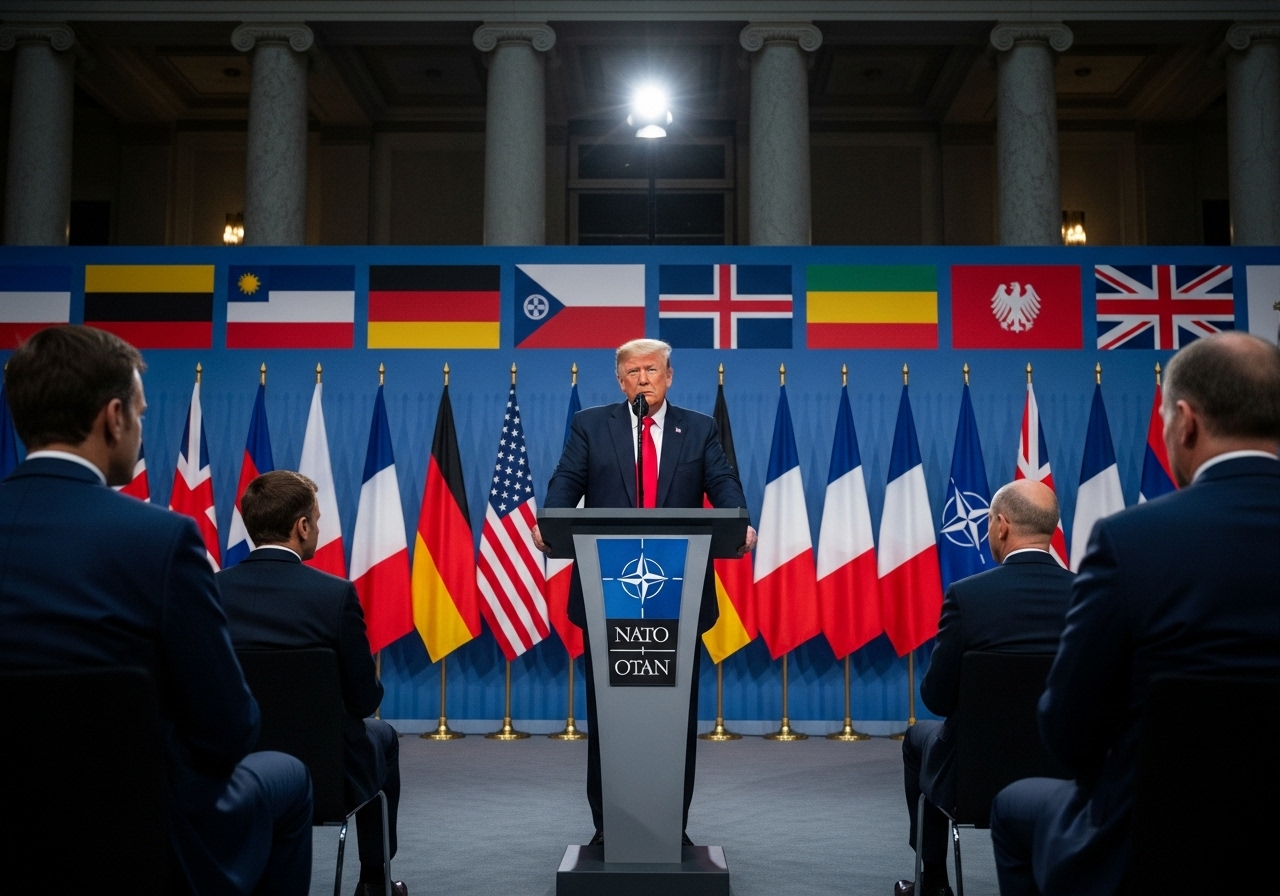
President Donald Trump has secured a major win on the world stage as nearly all NATO countries are now meeting the alliance’s defense spending target. According to data released by NATO, 31 of its 32 members are now spending at least 2 percent of their gross domestic product (GDP) on defense. Just two years ago, only 10 countries met that goal. This sharp increase follows years of pressure from Trump, who has made defense spending a top priority during both his terms in office.
Trump has long argued that the United States has carried too much of the financial burden for NATO. He has pushed for European countries to do more to protect themselves and the alliance. In recent years, especially after Russia invaded Ukraine in 2022, that message has gained more support among NATO members. Many countries began to increase their defense budgets in response to the growing security threat from Moscow and Trump’s renewed insistence that they step up.
The 2 percent goal has been part of NATO’s plan since 2014. But until recently, most countries ignored it, relying on the U.S. to fill the gap. Trump’s strong stance changed that. He warned that countries not meeting the target might not be defended by the U.S. In 2024, he even said he would “encourage” Russia to attack NATO members who failed to pay their fair share. Though controversial, the message was clear: the days of the U.S. covering for other nations were over.
Now, not only are countries meeting the 2 percent target, but they’ve agreed to go even further. NATO leaders have committed to a new goal of spending 5 percent of GDP on defense by 2035. This is a massive jump that will require serious investment from each member. Trump has praised this move, saying it shows NATO is becoming stronger and more fair. At a recent summit in the Netherlands, he said the alliance was “no longer obsolete” because members are now “paying their own bills.”
There is some debate over how defense spending is measured. Different countries calculate their GDP and military budgets in different ways. NATO says the numbers are based on payments made or planned during the fiscal year. Despite these differences, the overall trend is clear: defense spending across Europe is rising, and Trump’s policies are a big part of why.
Trump’s influence over NATO has also helped support the U.S. defense industry. Many European countries are now buying American-made weapons to modernize their forces and aid Ukraine. This boosts U.S. jobs and strengthens the bond between America and its allies.
NATO Secretary-General Mark Rutte, who hosted the June summit, said that investing in defense now will help prevent future wars. He warned that failing to prepare could cost much more in the long run. His comments reflect a growing belief among European leaders that they must take more responsibility for their own security.
The move toward 5 percent spending will not be easy. It will require each country to spend billions more on their militaries over the next decade. But the commitment shows that Trump’s push for a stronger, more self-reliant NATO is working. It also sends a message to Russia and other potential threats that the alliance is serious about defending its members.
This shift has major implications for U.S. politics as well. It shows that Trump’s foreign policy, often criticized in the past, is producing real results. His focus on fairness and strength has reshaped NATO and made it more accountable. For voters concerned about America’s role in the world and the cost of global alliances, this may be seen as a major success.
As NATO members prepare to spend more and modernize their forces, the U.S. will continue to play a leading role—but not the only one. That change, long sought by Trump, now seems well underway.