
Gustavo Petro has a gift. Not for leadership — Colombia’s first Marxist president has spent four years proving that. His gift is for drama. The man could turn a parking ticket into a conspiracy thriller, and this week he outdid himself.
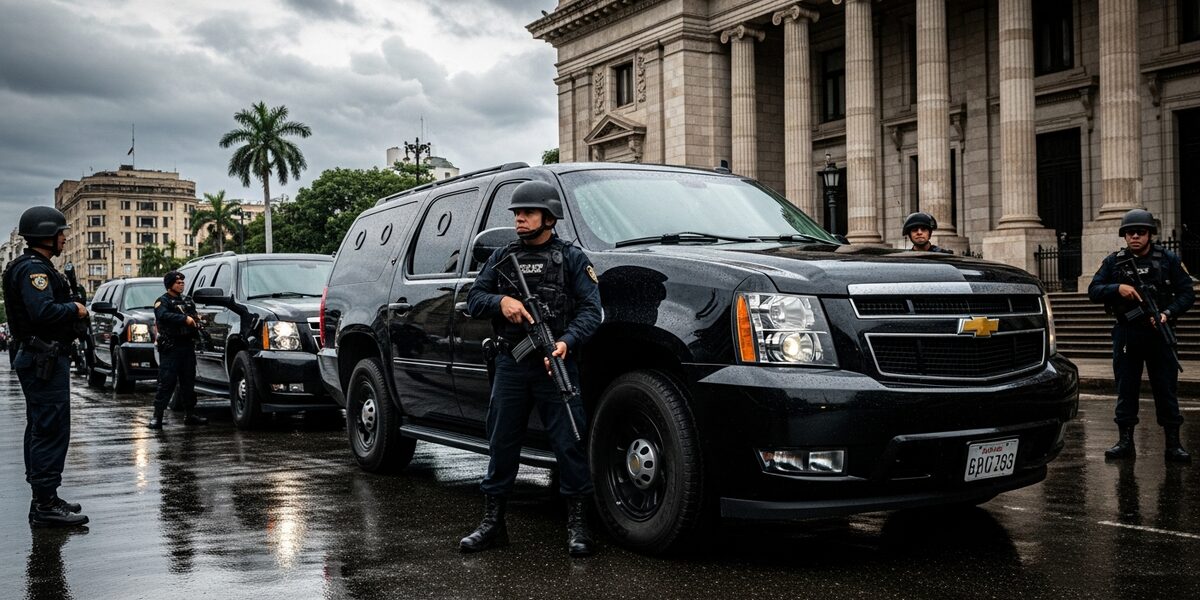
During a four-and-a-half-hour televised cabinet meeting — because apparently that’s how long it takes to govern when you’re making things up as you go — Petro claimed that saboteurs tried to plant “psychoactive substances” in his presidential vehicle before his trip to Washington to meet Donald Trump.
Drugs. In the president’s car. Right before a meeting with Trump. If this were a movie pitch, the studio would say it’s too on the nose.
Zero Evidence, Maximum Drama
Petro didn’t name names during his marathon broadcast. He didn’t present evidence. He didn’t even produce a suspicious baggie. He just dropped the accusation like a grenade and moved on — pointing vaguely at a police general he’d ordered removed from the force.
That general turned out to be Edwin Urrego Pedraza, a 32-year veteran of Colombian law enforcement who previously ran criminal investigations, led Interpol operations, and commanded police forces in multiple major cities. A man with a career longer than Petro’s attention span.
Urrego’s response? He called it “madness.” He offered to take a polygraph. He pointed out that no one had formally notified him of anything — he found out about the accusation from a WhatsApp video. The President of Colombia accused a decorated general of a criminal conspiracy, and the general learned about it the same way your uncle learns about weather alerts.
“No one has given me the opportunity to defend myself, nor have they presented me with any evidence,” Urrego told reporters. “And I don’t think there is any, because it didn’t happen.”
The Real Story Behind the Story
Colombian police sources told Semana magazine that the whole thing was a setup — not against Petro, but against Urrego. According to those sources, drug-trafficking groups in Barranquilla and Puerto Colombia that Urrego had targeted during his career manufactured an anonymous tip about the alleged plot. The tip reached Petro, and Petro — never one to let facts interfere with a good narrative — ran with it on national television.
So the working theory inside Colombia’s own police force is this: a decorated general cracked down on drug traffickers, the traffickers fabricated a story to destroy him, and the president of Colombia did their dirty work for them on live TV.
That’s not a conspiracy theory. That’s Tuesday in Bogotá.
The Man Making the Accusations
Context matters here. Gustavo Petro isn’t just any left-wing president. He’s a former member of the M-19 terrorist group — an actual Marxist guerrilla organization. He openly advocates for legalizing cocaine. Former members of his own administration have accused him of drug addiction. And he’s accusing someone else of planting drugs.
The irony is so thick you could pave a road with it.
Petro’s meeting with Trump last week was, by all accounts, surprisingly cordial. After spending most of 2025 posturing against Trump like a bantamweight fighter talking trash before a bout he knows he’ll lose, Petro showed up in Washington and played nice. “We didn’t hit or scratch each other,” he told reporters afterward. High bar, Mr. President.
Now, days later, he’s claiming dark forces tried to sabotage that meeting by stashing drugs in his car. It’s the kind of story that conveniently makes Petro look like a brave leader battling shadowy enemies — right when his presidency is circling the drain.
The Clock Is Ticking
Petro leaves office in August. Colombia’s constitution doesn’t allow a second term, so he’s done regardless. The country holds presidential elections in May, and if the polls are any indication, Colombia is ready to move on from its Marxist experiment.
Which makes the timing of this accusation very interesting. A lame-duck president with plummeting credibility, accusing a police general of an evidence-free conspiracy, based on an anonymous tip that his own police force says was fabricated by drug traffickers. It’s not governance. It’s a farewell tour for a man who never had the script right in the first place.
General Urrego says he’ll take legal action to defend his honor. Good. Because in a country where the president uses national television to destroy a career based on a WhatsApp forward, someone needs to.