
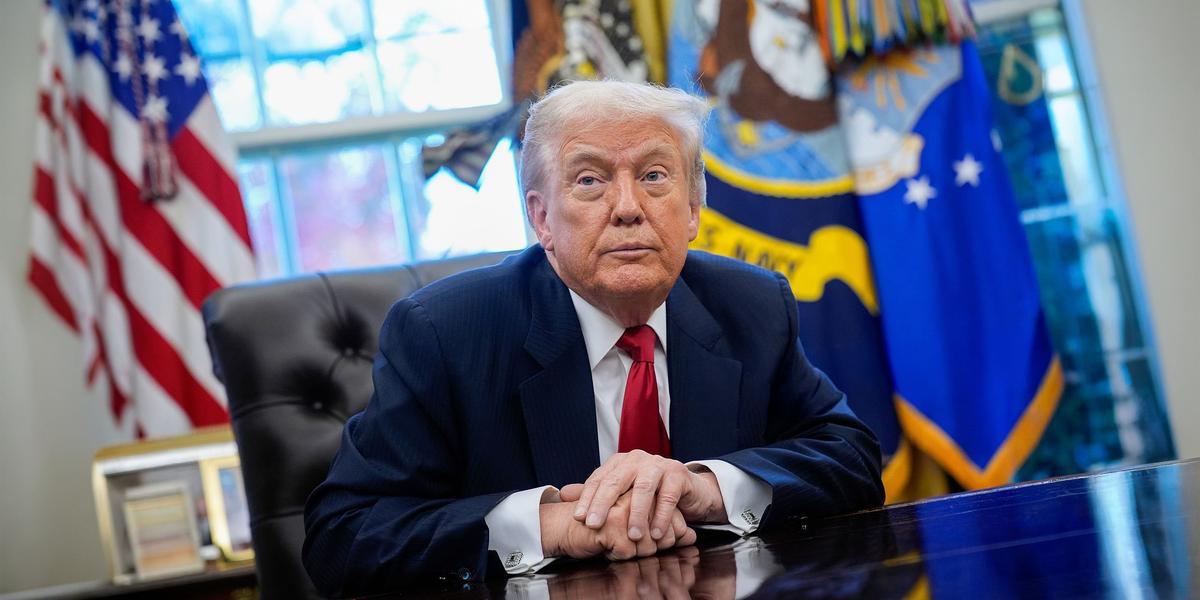
From $1 trillion to $1.5 trillion. That’s a 50% increase in defense spending, announced Wednesday on Truth Social.
President Trump says the jump is both necessary and affordable. Necessary because of “troubled and dangerous times.” Affordable because tariffs are generating “tremendous numbers” that make the larger figure viable.
But he’s not stopping at military spending. Trump says the tariff revenue will also pay down debt and provide a “substantial Dividend to moderate income Patriots.”
Defense hawks are celebrating. Progressives are apoplectic. And the Pentagon — which can’t pass an audit to save its life — is about to get a massive infusion of cash.
The “Dream Military”
Trump’s language was characteristically bold.
The $1.5 trillion budget would build what he called the “Dream Military” — a force that ensures America remains “SAFE and SECURE, regardless of foe.”
After years of Biden-era budgets that Republicans argued were effectively cuts when adjusted for inflation, Trump is swinging hard in the opposite direction. This isn’t incremental growth. This is transformation.
For context: Biden’s 2024 defense budget request was $886 billion. Trump is proposing nearly double that within two years.
The message to China, Russia, and every other adversary is unmistakable: America is rearming.
Tariffs Make It Possible
The funding mechanism is tariffs — the same tariffs that economists said would destroy the economy and that Democrats said would be paid entirely by American consumers.
Trump claims tariff revenues have exceeded all expectations, generating “amounts… that would have been unthinkable in the past.” Those revenues, he argues, not only cover the military increase but allow for debt reduction and direct payments to citizens.
“Because of Tariffs, and the tremendous Income that they bring… we are able to easily hit the $1.5 Trillion Dollar number,” Trump wrote.
Whether the math actually works is a separate question. But the political framing is clear: Trump is positioning tariffs as a wealth generator that benefits ordinary Americans, not just government coffers.
Dividends for “Moderate Income Patriots”
The most intriguing element: Trump mentioned providing “a substantial Dividend to moderate income Patriots.”
Details are sparse, but the implication is some form of direct payment to working-class Americans funded by tariff revenue.
This would be unprecedented. Tariff revenue has historically gone into general government funds. Redirecting it as direct payments would be a populist economic move that cuts across traditional left-right lines.
Universal Basic Income advocates have proposed similar concepts, though they’d fund it through tech company taxes rather than tariffs. Trump is essentially proposing a nationalist version — money extracted from foreign trade going directly to American workers.
The Progressive Meltdown
AOC and the progressive wing have long wanted to cut military spending, not increase it.
In 2020, over 50 progressive groups demanded Biden cut $200 billion annually from the Pentagon, end nuclear modernization, and eliminate the Space Force.
Those groups are about to watch military spending increase by $500 billion instead.
AOC has stated that “progressives do want to bring down the military budget” to fund priorities like $15 minimum wage and Medicare expansion.
Trump is doing the opposite — and claiming he can do it without cutting domestic programs because tariff revenue covers everything.
The progressive theory that military spending comes at the expense of social programs is being directly challenged.
Seven Failed Audits
Here’s the uncomfortable reality: the Pentagon can’t account for the money it already has.
The Department of Defense failed its seventh consecutive audit in 2024. It couldn’t fully track an $824 billion budget. Auditors identified 28 material weaknesses.
Now Trump wants to give them $1.5 trillion.
Defense hawks will argue that more money is needed regardless of accounting failures. That the threats from China and Russia are too serious to wait for bureaucratic reform.
Critics will argue you shouldn’t pour more money into an organization that can’t explain where the current money goes.
Both have a point.
Biden’s “Woefully Inadequate” Budgets
Republicans have been criticizing Biden-era defense budgets for years.
Senator Roger Wicker called Biden’s budget request “woefully inadequate and disappointing,” saying it failed to resource even Biden’s own National Defense Strategy.
Rep. Claudia Tenney argued that nominal increases were actually cuts: “the 3.2% increase doesn’t keep pace with inflation and the cost to refill depleted supplies around the world.”
Meanwhile, China and Russia continued ramping up military expenditures while America debated pronouns in the ranks and spent $30 million combating undefined “extremism.”
Trump is responding to those criticisms with overwhelming force — a budget so large it can’t be dismissed as inadequate.
The Biden Pentagon’s Priorities
Remember what the Biden Pentagon spent money on?
In 2022, they proposed $30.8 million to combat “extremism” in the military — without defining what extremism meant or having data on its prevalence. The initiative included social media screening, updated vetting protocols, and “awareness campaigns.”
Pentagon spokesman John Kirby admitted the program was inspired by “the events of January 6th.”
So while China built hypersonic missiles and Russia modernized its nuclear arsenal, America’s military leadership was screening soldiers’ Facebook posts for wrongthink.
Trump’s budget presumably has different priorities.
The Political Calculation
A $1.5 trillion military budget is a political statement as much as a policy proposal.
It tells defense hawks that Trump is serious about rebuilding military capability. It tells adversaries that America is willing to spend whatever it takes. It tells progressives that their dreams of redirecting military funds are dead.
And the “dividend to moderate income Patriots” tells working-class voters that Trump’s economic nationalism benefits them directly — not just corporations, not just the wealthy, but ordinary Americans.
Whether Congress will actually appropriate $1.5 trillion is another question. But Trump is setting the marker. The negotiation starts from his number, not someone else’s.
The Bottom Line
Trump wants a $1.5 trillion military budget funded by tariffs, with money left over to pay down debt and send dividends to working Americans.
It’s ambitious. It’s expensive. It directly contradicts everything progressives have advocated for years.
The Pentagon still can’t pass an audit. China is still rising. The world is still dangerous.
Trump’s answer: spend more than anyone thought possible and dare Congress to say no.
The “Dream Military” is the goal. Whether America can afford it — or afford not to have it — is the question that will define the next budget fight.