
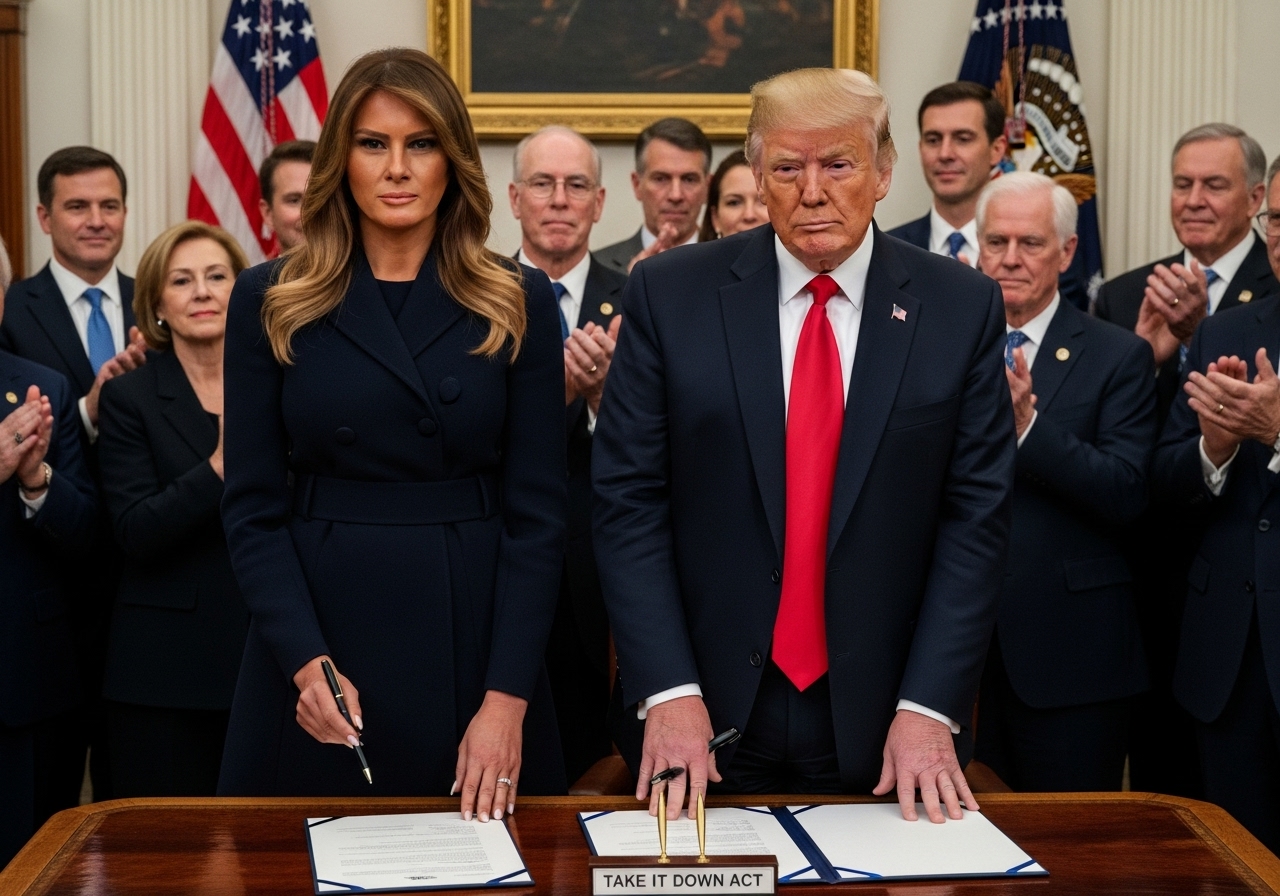
First Lady Melania Trump is once again stepping into the spotlight in Washington, this time with a new legislative effort set to be unveiled in 2026. Her announcement came during the annual Congressional Ball at the White House, where she reflected on one of the biggest bipartisan victories of the year: the passage of the Take It Down Act. That law, designed to protect Americans from the non-consensual distribution of intimate images—including those generated by artificial intelligence—was signed by President Donald Trump in May.
Melania Trump described the law as her “greatest triumph” of 2025, and for good reason. The bill passed the House with overwhelming support, 409 to 2, and cleared the Senate by unanimous consent. Sponsored by Sen. Ted Cruz (R-Texas), the legislation criminalizes the distribution of so-called revenge porn, including digitally altered images that misuse someone’s likeness without their permission.
This is not just about protecting privacy. It’s about defending personal dignity in an age where technology can be used to destroy lives. The internet can be a powerful platform for free speech, but it can also be a tool for abuse. The Take It Down Act strikes a careful balance, making sure that individual liberty is preserved while shielding innocent people from digital exploitation.
Notably, the president allowed the first lady to sign the bill alongside him in a symbolic gesture—affirming her leadership on the issue. It marked the first time a sitting first lady has signed legislation with a president, a strong statement about Melania Trump’s growing role in policy.
But what’s most interesting now is what’s coming next. Melania told lawmakers at the event that she is preparing a “new legislative initiative” for 2026, and while she didn’t offer details, she made clear it will be focused on children. President Trump himself admitted he hadn’t heard about the plan before that night, but said that if it’s coming from his wife, it’s “going to be great for children” and likely to receive strong support once again.
There are a few key takeaways from this moment that shouldn’t be overlooked.
First, it’s a reminder that the Trump administration’s second term is not just about economic reform, immigration, and national security. It’s also about tackling the cultural and technological threats that affect everyday Americans, especially children. From AI-generated content to the addictive nature of social media, Melania Trump is addressing issues that many families face but that Washington has been slow to confront.
Second, the bipartisan support for the Take It Down Act proves that not every important issue has to be a partisan fight. When the focus is on protecting people—especially minors—from abuse, lawmakers can come together. It’s a rare and welcome sign of unity in a deeply divided political landscape.
Third, this shows that the Republican Party under President Trump is not only defending constitutional rights but also modernizing its platform to meet new challenges. Conservatives have long stood for individual liberty, but that liberty means little if people’s images and identities can be stolen and used against them without recourse. The Take It Down Act reinforces the idea that freedom comes with responsibility, and that the law should protect the innocent from digital harm.
Looking ahead to 2026, Melania Trump’s new initiative may focus on online safety for children, digital literacy, or broader protections against AI misuse. Whatever the case, it will likely reflect her consistent concern for the well-being of young people. In her own words, she warned that AI and social media are like “digital candy”—addictive, engineered, and capable of shaping emotions and beliefs in unhealthy ways.
This is a message many parents understand instinctively. And in a time when Big Tech remains largely unchecked, it’s refreshing to see the White House taking real steps to protect American families.
Melania Trump’s growing policy influence is a sign of a more engaged and focused administration—one that understands the challenges of the modern age, and isn’t afraid to act. The success of the Take It Down Act sets the stage for what could be another bipartisan win in the year ahead.