
Iran wants you to know it isn’t scared. The foreign ministry held a press conference in Tehran on Monday to announce that any American attack — “even limited” — would be considered “an act of aggression. Period.” And that Iran would respond “ferociously.”
That’s the word they chose. Ferociously. While the United States assembles the largest concentration of airpower in the Middle East since the 2003 invasion of Iraq. While B-2 bombers have already demonstrated what happens when Tehran’s nuclear ambitions outpace diplomacy. While American bases surround Iran on virtually every side — Jordan, Kuwait, Saudi Arabia, Qatar, Bahrain, the UAE, and Turkey.
Ferociously. From a country whose air defenses couldn’t stop the bombs that already hit their nuclear program. The word is doing a lot of heavy lifting.
The Negotiating Table and the Flight Deck
Negotiations are set to restart Thursday in Switzerland. This is round two of indirect talks under Omani mediation. Iranian Foreign Minister Abbas Araghchi leads for Tehran. Steve Witkoff and Jared Kushner represent the United States. The format is indirect — the two sides don’t sit across from each other. Oman shuttles between them.
The diplomatic track is real. Both sides have shown up. Araghchi posted on X that he came to Geneva “with real ideas to achieve a fair and equitable deal.” He also added the line that defines Iran’s negotiating posture: “What is not on the table: submission before threats.”
The military track is also real — and it’s not subtle. The Pentagon has repositioned air and naval assets closer to the Middle East at a pace and scale that military analysts say matches or exceeds the 2003 Iraq buildup. Strike platforms. Air defenses. Naval assets. The kind of hardware you move into position when diplomacy has a deadline and the clock is running out.
Trump’s envoy Witkoff said on Fox News that the president is wondering why Iran hasn’t “capitulated” in the face of Washington’s deployment. That’s not diplomatic language. That’s the language of a man who believes the other side is playing a losing hand and knows it.
The Iranian Bluff
Iran’s foreign ministry spokesman Esmaeil Baqaei delivered the “ferocious response” line with the theatrical gravity that Tehran has perfected over four decades of confrontation rhetoric. He added that “Iranians have never capitulated at any point in their history.”
That’s a nice line for domestic consumption. It plays well in Tehran. It sounds strong on state television. And it has almost no relationship to military reality.
Iran’s conventional military capabilities are a generation behind American technology — in some areas, two generations. Their air force flies aircraft from the 1970s. Their air defense systems, while upgraded in recent years, failed to prevent the B-2 strikes that Trump authorized against their nuclear facilities. Their navy is a coastal force operating in a region where the U.S. Fifth Fleet maintains permanent carrier strike group presence.
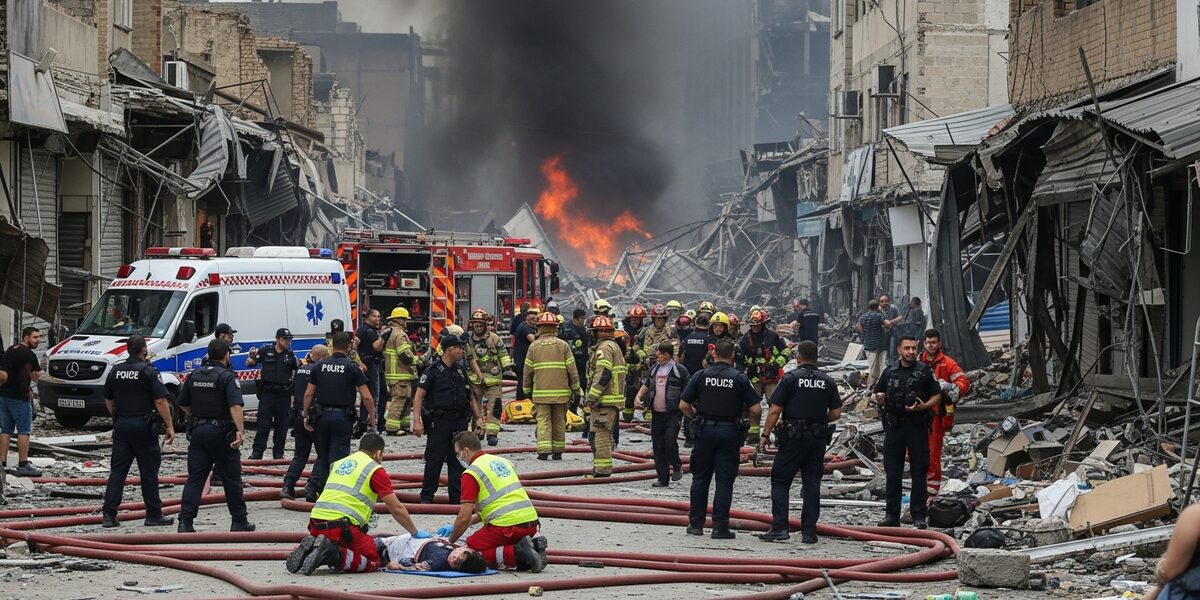
What Iran does have is asymmetric capability. Proxy forces across the region — Hezbollah, the Houthis, Iraqi militias. The ability to disrupt shipping in the Strait of Hormuz. Missile and drone arsenals that can threaten U.S. bases and allied nations throughout the Gulf. And a willingness to use all of it if they believe the regime’s survival is at stake.
That’s the real threat. Not a “ferocious” conventional military response. A messy, multi-front escalation through proxies and asymmetric tactics designed to make any American strike cost more than it’s worth.
Trump knows this. The military buildup isn’t just about strike capability. It includes additional air defenses and defensive naval assets — the kind of posture you adopt when you expect retaliation and want to absorb it without losing the initiative.
The Thursday Deadline
Thursday’s talks are, functionally, an ultimatum wrapped in diplomatic protocol. The United States has positioned its military for a strike. Trump has publicly stated he’s considering “limited strikes” if no deal is reached. Senator Lindsey Graham said the decision point is “in weeks, not months.” And the envoy is publicly questioning why Iran hasn’t already capitulated.
Iran’s options are narrowing. They can make a deal — which means accepting constraints on their nuclear program in exchange for sanctions relief. They can stall — which risks running out the clock on Trump’s patience. Or they can walk away — which means facing the largest American air armada since 2003 with a military that has already proven incapable of stopping precision strikes.
The “ferocious response” rhetoric suggests Tehran is trying to create enough perceived cost to deter a strike. If the U.S. believes retaliation will be severe — regional war, proxy attacks, disrupted oil supply — maybe Washington blinks.
But Trump doesn’t blink. He’s demonstrated that consistently across both terms. He killed Qasem Soleimani and Iran launched a face-saving missile barrage that hit sand. He authorized the B-2 strikes and Iran’s nuclear program took a hit it’s still trying to recover from. The pattern is clear: Trump escalates, Iran threatens, Trump acts, Iran absorbs.
The Real Audience
Iran’s “ferocious” warning isn’t really aimed at America. It’s aimed at the Iranian public and the regime’s internal power structure. The clerics need to project strength. The Revolutionary Guard needs to believe the regime will fight. The population needs to hear that capitulation isn’t on the table.
But the people making decisions in Tehran know the math. They know what’s parked in the Gulf. They know what B-2s can do. They know that “ferocious” isn’t a military strategy — it’s a word you use when your strategy is running out of options.
Thursday will tell us whether the word becomes reality or whether Tehran finds a way to call it a deal and save face. Either way, the aircraft carriers aren’t leaving. The bombers aren’t standing down. And the president who already pressed the button once isn’t going to hesitate to press it again.
Iran promised ferocious. America promised Thursday. We’ll see which one blinks first.