

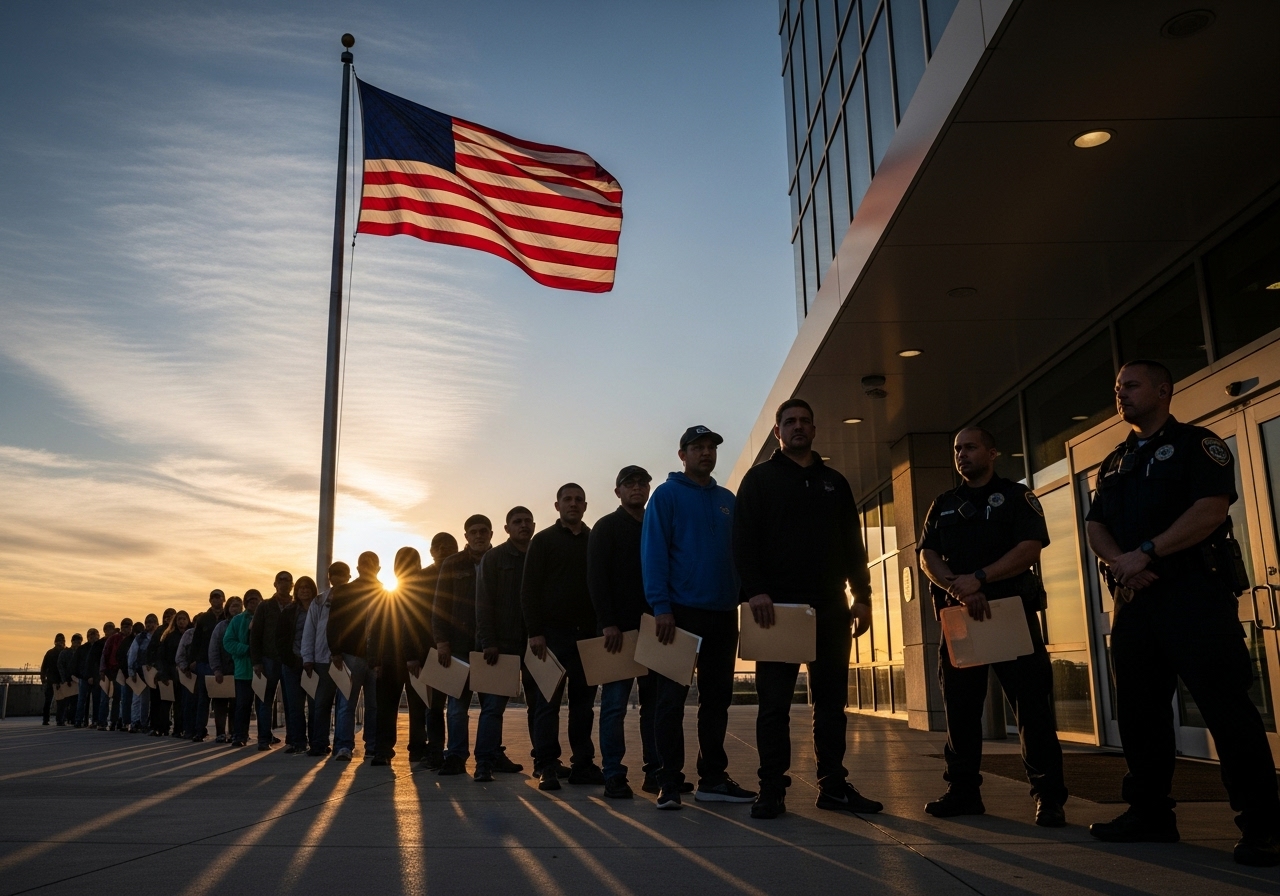
More than 100,000 Americans have applied for positions with U.S. Immigration and Customs Enforcement (ICE) in response to a sweeping recruitment campaign launched by the Trump administration in late July. The surge in applicants reflects both a renewed national focus on immigration enforcement and growing public support for a more assertive federal role in border and interior security.
The Department of Homeland Security (DHS) confirmed to Fox News Digital that the campaign—aimed at hiring 10,000 new ICE agents—has already exceeded expectations, with over 80,000 applications submitted within the first ten days and over 100,000 by mid-August. This rapid response closely follows President Trump’s push to rebuild ICE’s enforcement capacity after what officials describe as a period of policy neglect under the Biden administration.
DHS Secretary Kristi Noem framed the recruitment effort as a patriotic call to action during what she described as a pivotal moment for the country. “Our country is calling you to serve at ICE,” she said, citing the need to remove criminal illegal aliens and restore law and order at the border and beyond. Acting ICE Director Todd Lyons echoed the sentiment, pointing to the agency’s expanded resources under the “One Big Beautiful Bill,” which provides funding for aggressive hiring, training, and operational expansion.
The recruitment drive includes significant incentives: signing bonuses of up to $50,000, student loan repayment or forgiveness programs, and an easing of certain entry restrictions—such as age caps—that previously limited the applicant pool. These changes have opened ICE law enforcement roles to a broader and more diverse group of candidates, many of whom see the opportunity as both a career and a form of national service.
The campaign comes at a time of heightened risk for ICE personnel. According to DHS data, assaults on ICE agents have surged by at least 830% since early 2023, with Secretary Noem stating that the increase has now reached 1,000%. The violence, much of it tied to political protests and direct confrontations during immigration enforcement operations, has raised concerns about officer safety and the broader public discourse around immigration law.
This escalation in violence against federal agents coincides with a broader political shift in how immigration enforcement is viewed. Under the Trump administration, ICE has been re-empowered to carry out its statutory mission without the administrative constraints imposed during the Biden years. The current recruitment surge, coupled with the administration’s rollback of prior limits on enforcement activity, signals a return to a more traditional interpretation of federal immigration authority—one centered on interior enforcement, deportation of criminal aliens, and deterrence through legal accountability.
From a political standpoint, the overwhelming interest in ICE careers suggests a nationwide appetite for restoring law enforcement’s ability to uphold immigration law. It also may reflect a broader cultural shift, particularly in light of the Trump administration’s messaging around national security, sovereignty, and respect for the rule of law. The recruitment numbers reflect more than employment interest—they point to a growing alignment between public sentiment and the administration’s immigration agenda.
For states, the implications are complex. On one hand, a stronger ICE presence bolsters cooperation between federal and local agencies, especially under Section 287(g) agreements that allow ICE to partner with state and local law enforcement. On the other, states with sanctuary policies may see increased tension with federal authorities as enforcement activities intensify. This dynamic could reignite debates over states’ rights, particularly around whether local jurisdictions can refuse to cooperate with federal immigration detainers or ICE access to detention facilities.
The recruitment campaign also raises questions about civil liberties and the balance between enforcement and constitutional protections. While ICE agents are bound by federal law and agency protocols, increased enforcement activity—particularly in interior cities—has historically drawn scrutiny from civil rights groups concerned about racial profiling and due process violations. The Trump administration’s approach so far has emphasized accountability and oversight while remaining unapologetically focused on enforcement.
Looking ahead, the success of the ICE recruitment campaign may serve as a bellwether for other law enforcement and national security initiatives. If public willingness to serve in ICE is any indication, the administration’s broader efforts to restore federal authority, reassert immigration law, and prioritize public safety are likely to meet with continued grassroots support. As the 2026 midterm elections approach, immigration enforcement may again become a defining issue—both as a matter of policy and as a reflection of the country’s evolving political identity.